
It is an iconic movie scene that depicts a certain era of military discipline – a drill instructor screaming abuse at a hapless group of US Marine Corps recruits.
The opening of Stanley Kubrick’s 1987 Vietnam flick Full Metal Jacket is uncomfortable viewing. But it was given the ring of realism because R Lee Ermey – the actor portraying the infamous Gunnery Sergeant Hartman – once held that rank for real and was well aware of how leaders from his past life acquitted themselves.
Although his performance is rightly acclaimed for being an exceptional, and blackly comic, piece of cinema, the shadow cast by it has sometimes proved unhelpful for those training the Army’s next generation of regimental sergeant majors (RSMs).
For while the real-life characters on which Hartman was based are consigned to history, there is still a perception they exist.
“There are definitely some people who believe that the drill sergeant in Full Metal Jacket is what we’re like now,” says WO1 Matt Howarth (RE) (pictured below), responsible for overseeing the RSM designate course as command sergeant major of the NCO Academy.
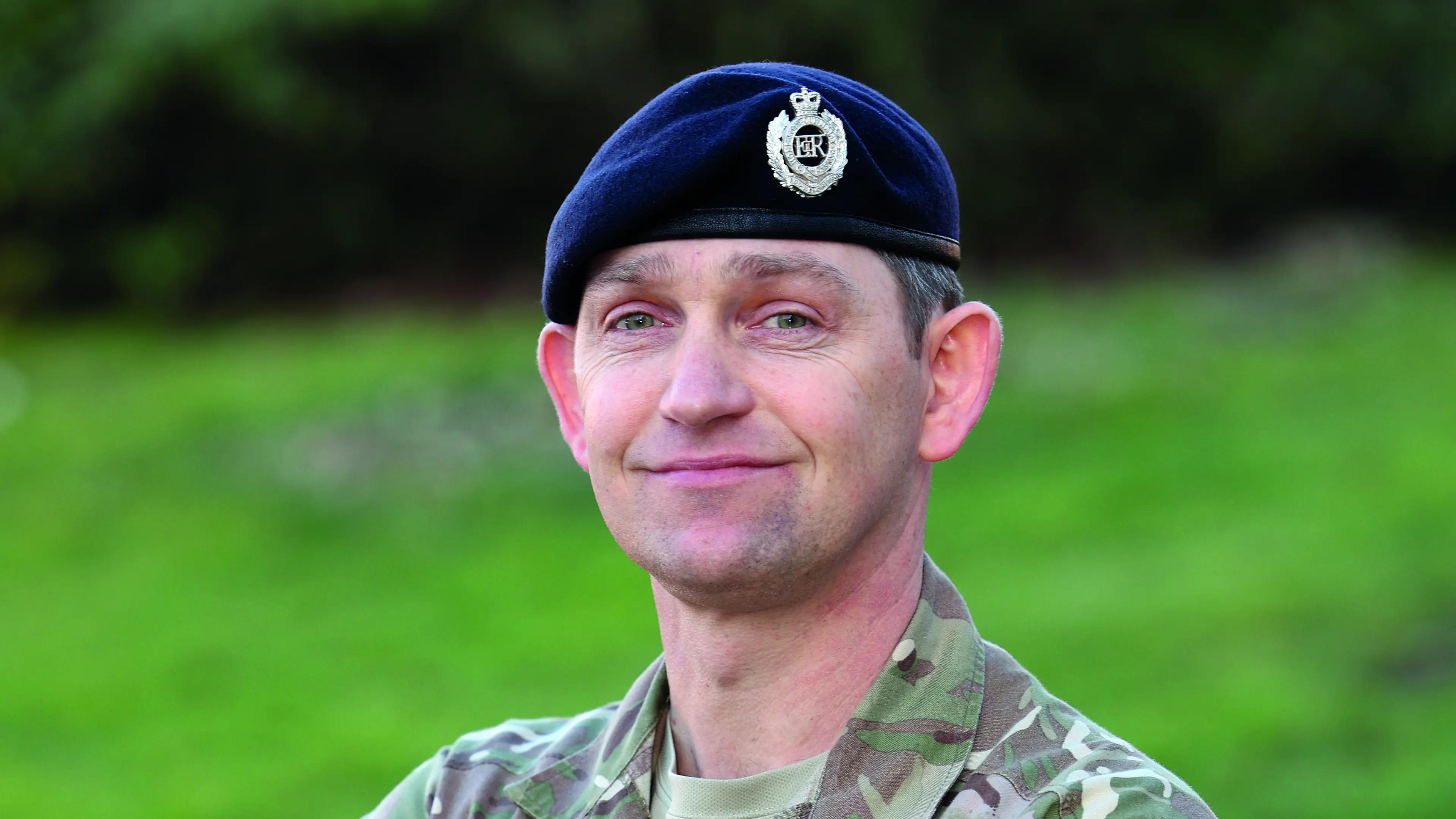
WO1 Matt Howarth (RE)
“But the era when people shouted and screamed is long gone – for me, the picture of a good leader is more like former England footballer David Beckham, who never seemed to raise his voice, was always approachable and who learned from his mistakes.”
There are certainly no Hartman-esque characters in the 55-strong cohort making up the latest course for RSMs, which is hosted at the Army Staff Leadership School in Pirbright.
Drawn from across the Service, they collectively have centuries of soldiering experience between them – including the era of large-scale ops in the Balkans, Afghanistan and Iraq.
After progressing through the NCO chain and being tested extensively on deployment, however, the expectation on those handed the pace stick is now perhaps the greatest it has ever been.
The five days of preparation on this course – one of three held each year – provides an overview of a role that requires its holders to become the lynchpin of unit efficiency.
These individuals must be the embodiment of standards and the go-to point for soldiers and officers seeking guidance.
Diplomacy, tact and an ability to listen – as well as leading by example – are the attributes required for success; a culture of fear will soon end in failure.
“Every RSM job is unique and so the course is quite broad in approach,” continues WO1 Howarth.
“However, with all RSMs becoming the principal adviser to their commanding officers, a key focus is on maintaining this relationship – an environment of trust is critical but they must have the confidence to challenge when needed.
“With this in mind, we have also been looking at how we might integrate part of the training with a package that designate COs must undergo,” he tells Soldier.
“This could help both parties better understand the nature of the relationship.”
With such a multi-layered remit and an Army continuing to change, WO1 Howarth says the course has already undergone significant revision.
With a packed speaker line-up headed by the Army sergeant major, the delegates receive a comprehensive overview of the leadership challenges they are likely to face in a position that straddles rank-and-file soldiers on one hand and the cadre of officers on the other.
Most recently the programme has been expanded to examine the role of the regimental sergeant major in wider UK defence and their position in Nato’s multinational environment.
And there is now a greater emphasis on breakout groups and networking opportunities for the new incumbents to pool knowledge and trade best practice.
Course planner WO2 Carl Kane (RLC) believes that giving attendees the time and space to develop relationships is as important as the classroom learning.
“It is key that we provide the RSMs their own network,” the full-time Reservist, who was an infanteer in The Green Howards and master driver in a 24-year Regular tenure, continues.
“Their role is very different to when I joined in the dim and distant days of 1999 – principally they are now more visible and approachable to the soldiers they are responsible for.
“It is a demanding life so it is helpful to be able to call on one another.”
The chance to meet with colleagues is certainly appreciated by those at Pirbright – who also highlight the depth and perspective of the week’s syllabus.
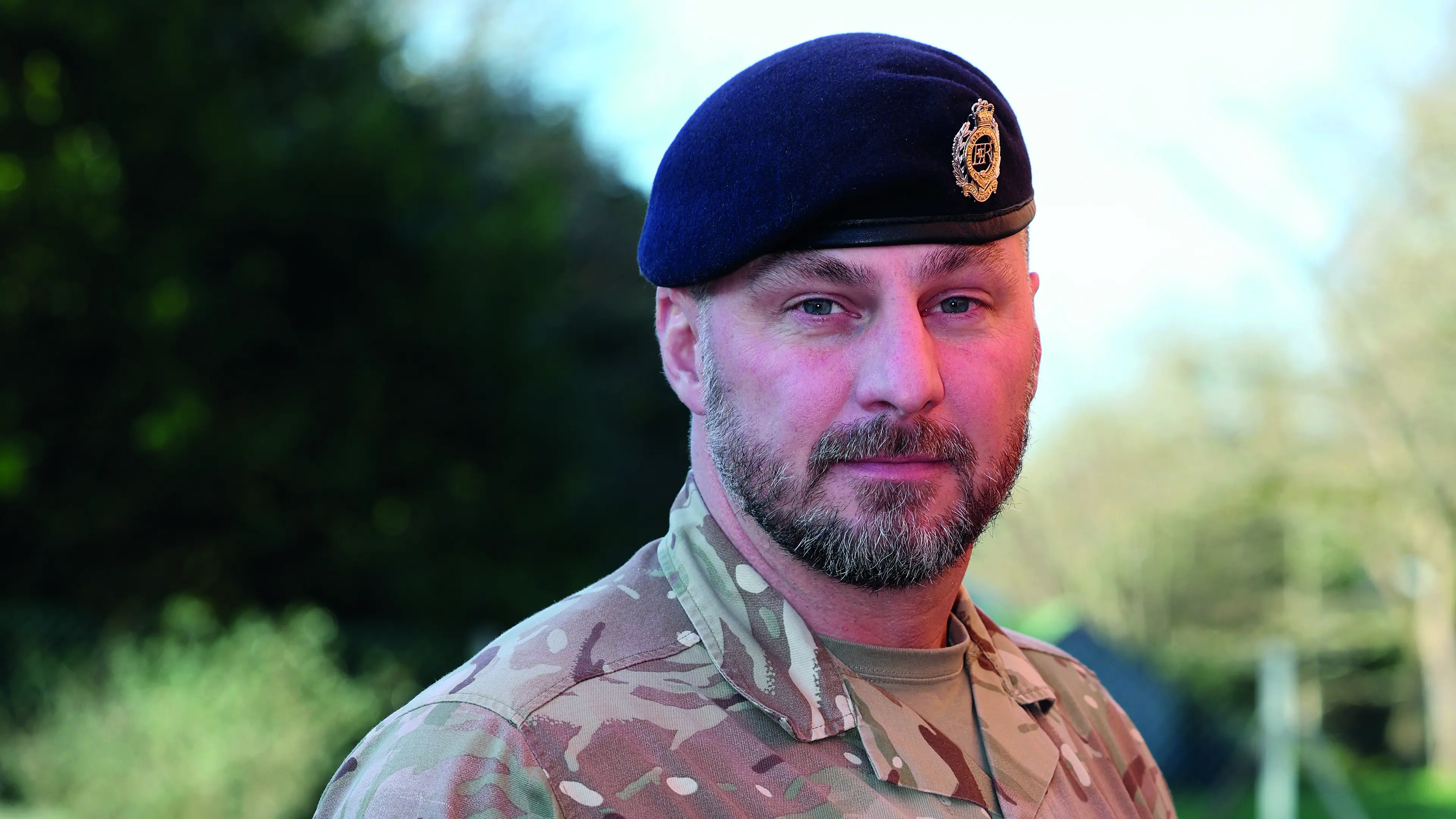
WO1 Will Laughlan (RE)
“We’ve all learned a lot,” says WO1 Will Laughlan (pictured above), the new RSM at Glasgow University Officers’ Training Corps.
“The Nato perspective has been especially useful, as has meeting the Army sergeant major, who made it clear he’s here to help.”
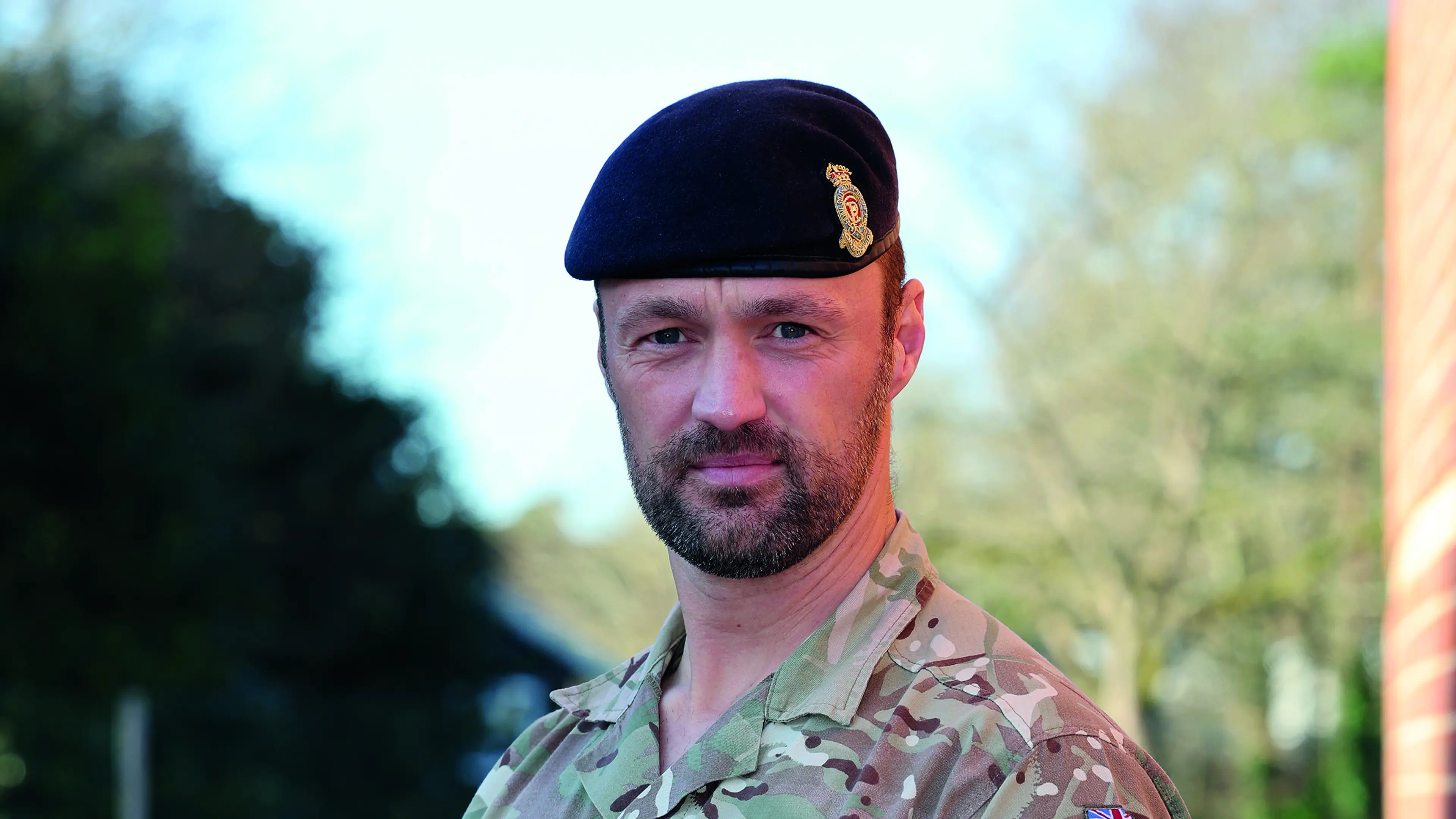
WO1 Jack Colvan-Graham (RHA)
Colleague WO1 Jock Colvan-Graham (pictured above) agrees.
“Despite your experience, I think you can have a sense of imposter syndrome when you arrive in this post and find people turning to you for answers,” says the career gunner and RSM at 3 Royal Horse Artillery.
“I’ve worked towards becoming an RSM for a long time now, and being with other people new in post has been great – it has definitely helped to foster greater confidence.”
Beckham’s quiet self-assurance may inspire some, but for 5 Rifles RSM WO1 Ciar Crow the footballer is not the perfect parallel.
“I think if you put me on the spot in the Hartman v Beckham debate, the ideal RSM temperament needs to be made up of around three quarters the former England captain and the remaining 25 per cent the gunnery sergeant,” he continues.
“You’d need to convince me that David Beckham is the ideal model in his entirety.
“My assumption is that he is a good leader, but I’m not sure he has a ‘good telling off’ in him, so to speak.
“In short, people need to know that Hartman is in you, even if he doesn’t often appear. It’s no good if all you do is shout, though, which was my early experience of the RSM.
“My style is more of the disappointed dad when I have to reprimand somebody.
“In all seriousness, this role requires you to have more in your toolbox now in terms of helping your soldiers – an open-door policy.”
Collectively, senior personnel bring huge breadth of experience to the benefit of troops and officers alike. However – as WO1 Howarth points out – it is important they also consider themselves.
“Going back to David Beckham, one of his key strengths was that he kept an eye on the future and his aspirations beyond the pitch,” he points out.
“Our leaders must do the same as they think about the later stages of their careers, whether they want to look at a late entry commission, a command sergeant major role or opportunities on civvy street.”
