
For a moment, it appeared as if we’d stumbled across the forest stage of a motor rallying event.
The low-slung vehicle tore down the narrow dirt track between the trees at a ferocious pace, the driver inducing a Tommi Mäkinen-inspired Scandinavian flick to take it sideways round a tight bend before disappearing into the distance in a shower of mud and spray.
What we’d just witnessed was not motorsport but a test run of a remarkable piece of military kit called the All-Terrain Electric Mission Module (Atemm) – in essence, a huge battery pack on wheels.
And if the speed and agility of the platform was surprising, the variety of roles it can be used for is simply astonishing.
The Atemm can recharge soldiers’ radios and dismounted situational awareness tools; power a field hospital or command post for more than three days continuously; provide silent electric drive for a lead wheeled vehicle or boost its performance (which we’d witnessed); and be detached and operated remotely as an uncrewed ground vehicle to carry cargo or be a weapons station.
This remarkable platform is just one of a large number of cutting-edge pieces of kit currently being evaluated by the Army Trials Unit (ATU) – a team at the very forefront of developing the next generation of hardware for the service.
“We are in the middle of the most significant modernisation process for decades and the ATU is right at the centre of it,” explains commanding officer Lt Col Paul Cooper (Mercian).
“We can test and properly evaluate just about everything the British Army is interested in using – from gloves and boots to the Challenger 3, artillery systems, trucks, drones and potential replacements for the SA80.
“The only things we don’t trial are comms kit, electronic warfare tech, crewed aviation and medical tech, as these are done by specialists elsewhere in defence.”
The recent amalgamation of the army’s five trials and development units to form the ATU under the umbrella of the Experimentation and Trials Group (ETG) makes complete sense when you consider the multi-cap badge use of new technology.
All kit that Army HQ deems worthy of trialling properly – with a view to potential procurement by the MoD – has to be evaluated from every conceivable angle, including reliability, safety, compatibility, endurance and even through-life servicing and maintenance.
“In previous years, kit such as Atemm would have gone through several trials managed by different teams,” says ATU’s WO2 Simon Piper (QRH).
“But what’s the point of driving a vehicle in one place to test its off-road ability, then taking it somewhere else to examine its recharging performance and somewhere else again for gauging how it combines with in-service platforms?
“We can do all these tests simultaneously now and creating the ATU has, without doubt, streamlined the trials process.”
With the army now being encouraged to experiment and innovate at all levels as part of the drive to multiply lethality and enhance survivability, Lt Col Cooper believes units should consult with the ETG at the earliest opportunity to ensure the best test methods and save valuable time.
“There is the Knowledge in Defence (KiD) app on Defence Gateway where personnel can see the process for bringing kit into service, but there is still a lot of leeway in the detail of how it’s done – there is no one set process for evaluating whether a piece of equipment is suitable for the British Army.”
Trials and evaluations are generally put together on a case-by-case basis.
Boxer was given a different path to Ajax, for example, with Millbrook Proving Ground selected as the best place for evaluation because while it still had to be confirmed it could meet certain British Army requirements, the vehicle was proven to a large degree thanks to around 1,800 units already in service with Germany, Australia, the Netherlands, Lithuania and Ukraine.
Ajax, meanwhile, was brought to Bovington for extensive trials because the ATU had access to soldiers who could test it in realistic conditions. As a new design it required a thorough evaluation of its all-round performance.
“We don’t do just acceptance trials, we have the capacity to involve users in the design process to influence outcomes,” explains Lt Col Cooper.
“We work closely with the Defence Science and Technology Laboratory and Defence Equipment and Support – we have strong relationships with those organisations. And being part of ETG means that our trials are cohered with the army’s wider experimentation activity.
“We can do comparative trials using opposition kit, or with other possible options for procurement, and we also do reliability growth trials – we’ll drive a platform round and round, for example, thrash it to see what breaks and if a piece does constantly we know a change is required.
“Then we’ll find out if the modified piece causes other elements to break.
“With Ajax, we have driven it for more than 40,000km, tested its gun and sighting system for software bugs, and investigated and resolved around 2,000 issues in total.”
The ATU team took Ajax to Sweden for cold-weather trials and Saudi Arabia for hot-weather evaluation because “where you trial equipment is absolutely critical”, notes WO2 Piper.
“We test with troops in realistic environments such as exercises or staged scenarios that we call battlefield missions because our job is to provide the user perspective,” he adds.
“At ATU we have numerous warrant officers or senior NCOs covering every expertise we require.
“Among others, we have two Small Arms School Corps warrant officers, our own highly qualified military diver, a master gunner, a master driver, and one of only two artificer sergeant major recovery mechanics in the whole of the army.”
ATU also conducts through-life trials to explore how to improve and keep established kit in service longer.
Currently the team is appraising modifications to the Panther vehicle (pictured left) that could lead to a button being installed which, when pressed, blows open its heavy doors using pneumatic pistons – just one measure designed to make the platform safer and extend its service life by a decade to 2035.
And in a few years’ time, when personnel jump out of the modified Panthers wearing their snug next-generation boots, they can thank the ATU, which recently fitted out 300 troops of every conceivable size to trial a proposed new design for the next standard issue footwear.
Primary tests included gauging grip levels on various surfaces, including the sheet metal surfaces of a vehicle, and foot comfort in hot and cold conditions after marching several kilometres a day for two weeks solid.
The user feedback being collected, and the ATU’s very detailed trial report that will follow, will help inform the MoD’s final procurement decision.
The staff at ATU, like every soldier out there, know that every piece of kit, however humble, deserves the closest scrutiny because even the most humdrum items can prove just as vital to battlefield missions as the space age tech that grabs the headlines.
As former chief of the general staff, Gen Sir Patrick Sanders, once put it: “You can’t cyber your way across a river.”
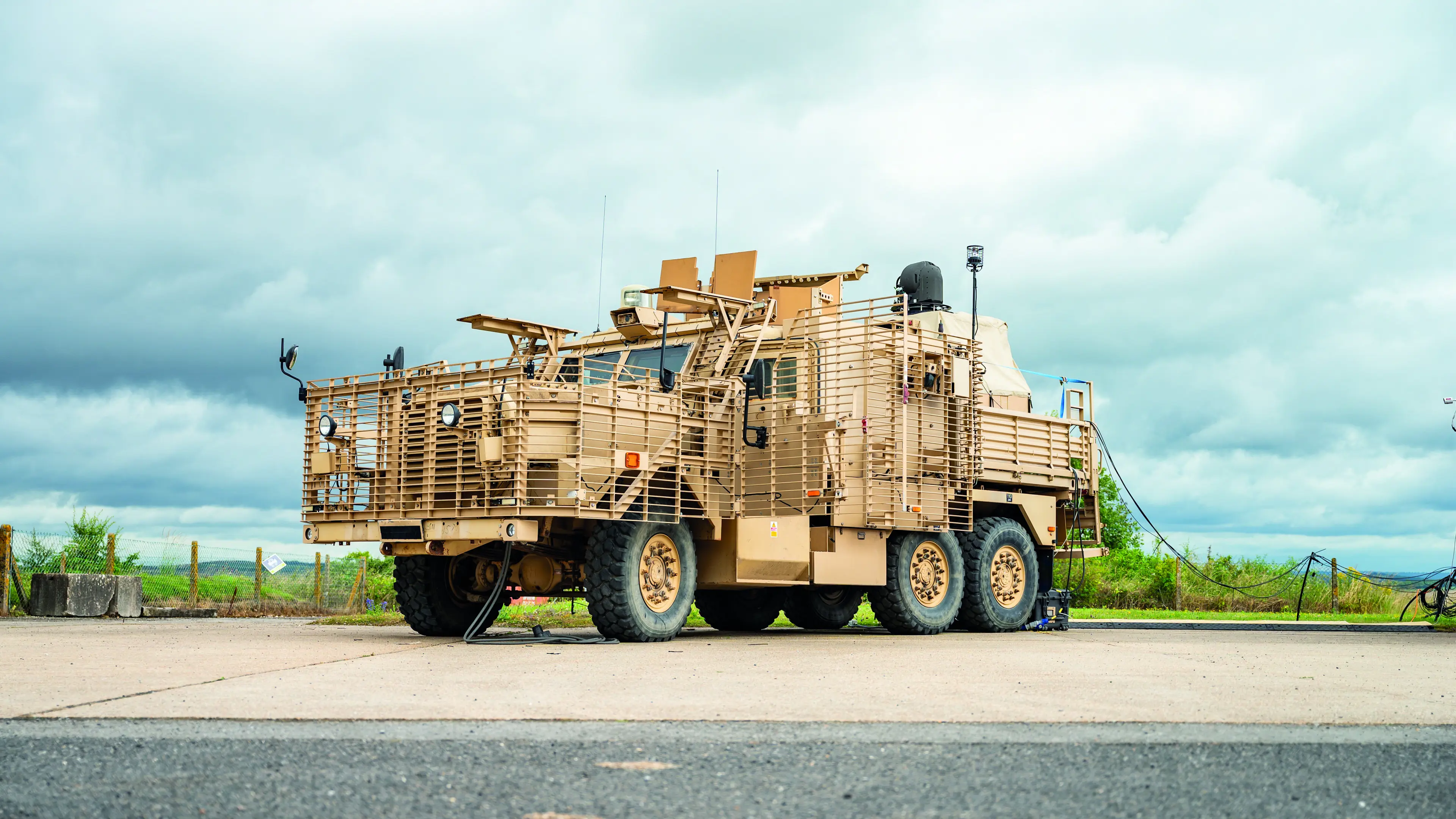
Counter-UAS laser on test
Counter-UAS laser
ATU’s WO2 Matt Anderson (SASC) from the Mounted Close Combat TDG was the trials manager for the recent and well-publicised test of the high-energy laser weapon mounted on an armoured vehicle. It successfully destroyed several drones in flight. And he remains the only person in the army to have set up a laser range for testing such technology.
“It was a potent 15-kilowatt weapon that is hazardous out to more than 3,000km,” he tells Soldier. “We didn’t fire above the horizon, as a result.
“Fire it into the sky and it could damage aircraft or even satellites, including those orbiting far out. If you damage another nation’s asset it could be considered an act of war.
“We had to monitor our test drones very thoroughly too because any shiny surfaces had the potential to deflect the laser beam in an unpredictable way and its energy doesn’t dissipate in the way that a bullet’s does – it can still be dangerous many hundreds of miles out.
“It was a fantastic experience to run the trial but one of the most difficult jobs I’ve ever done.”
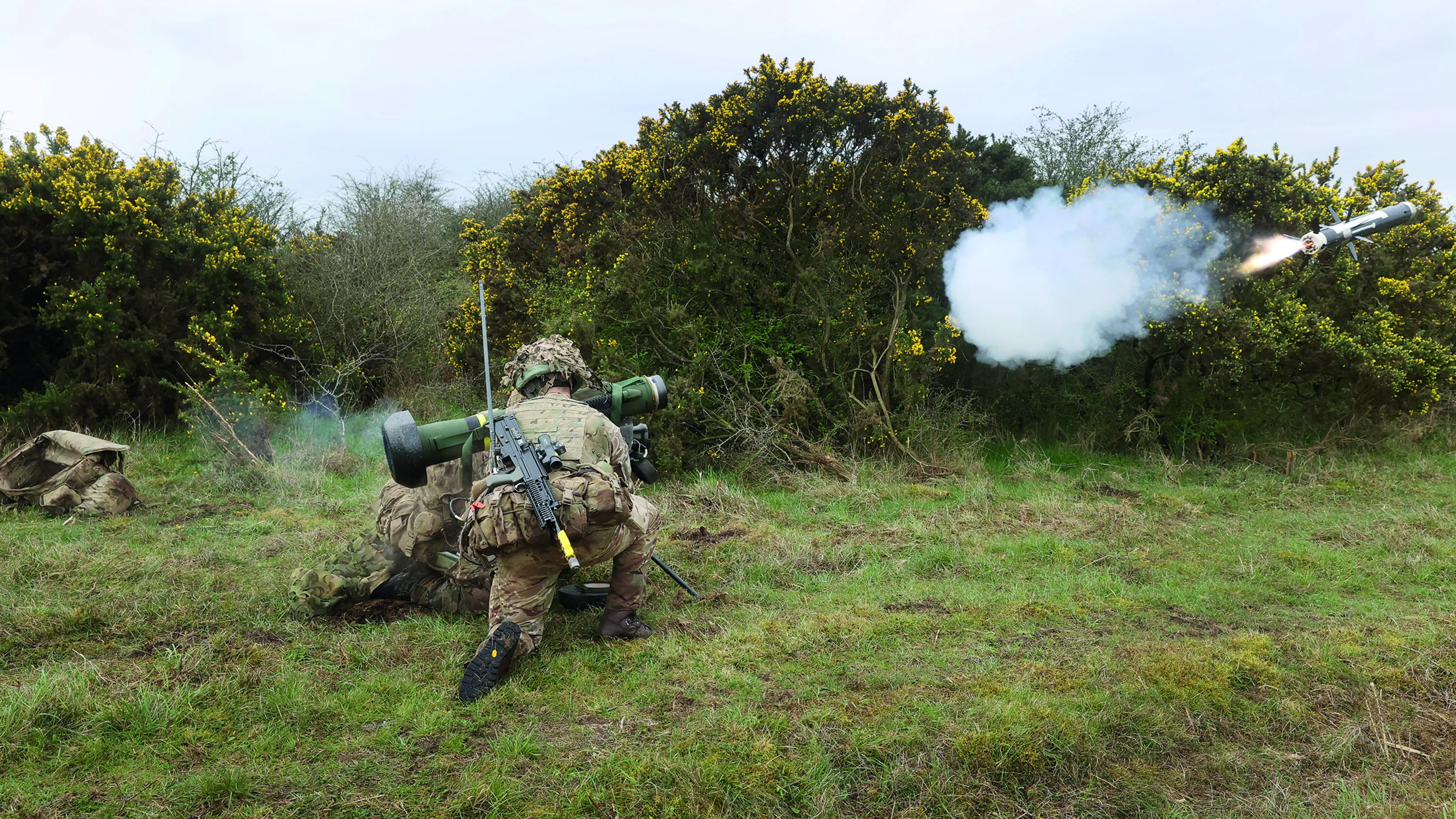
Javelin
Long-range Javelin
The effective range of the Javelin weapon system is currently 2.5km but teams from the ATU recently became the first to fire it out to 4.2km while testing whether new and improved optical sights could increase its capability. The trial was on Salisbury Plain Training Area.
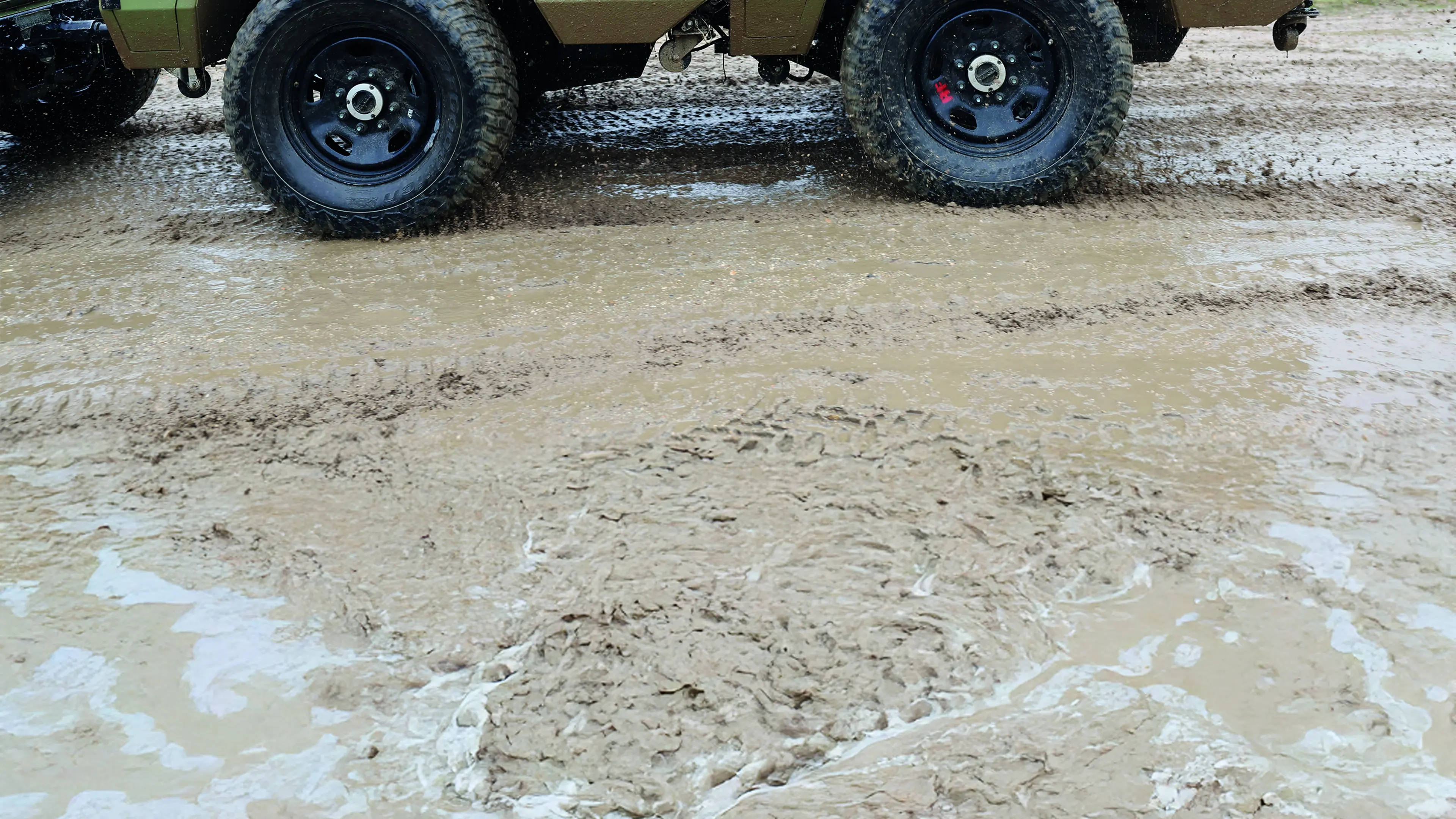
Electric mission module
All-Terrain Electric Mission Module
“This is not a sexy looking bit of kit but it’s damned useful,” says SSgt Sam Spearpoint (REME), an ATU project manager.
“With the right adaptations to the lead vehicle it can provide hybrid or even silent stealth power, controlling drive and on-board systems.
“This big battery on wheels can also turn into a remote-controlled UGV and each axle can steer while the wheels can crab 90 degrees, which is useful for manoeuvring on urban operations.
“In the near future, we are looking at installing electric ‘jerry can’ batteries to go on its back that charge up on the move and can be removed to provide power to dispersed troops for their devices.
“Power supply innovations like this are vital to the army. When we deploy out everyone takes the largest generator they can, we burn lots of fuel and then we have the logistical challenge of refuelling them.
“We suffered loads of casualties in Afghanistan when people were doing fuel runs and if you can reduce fuel usage we are going to enhance our survivability as well as efficiency.”
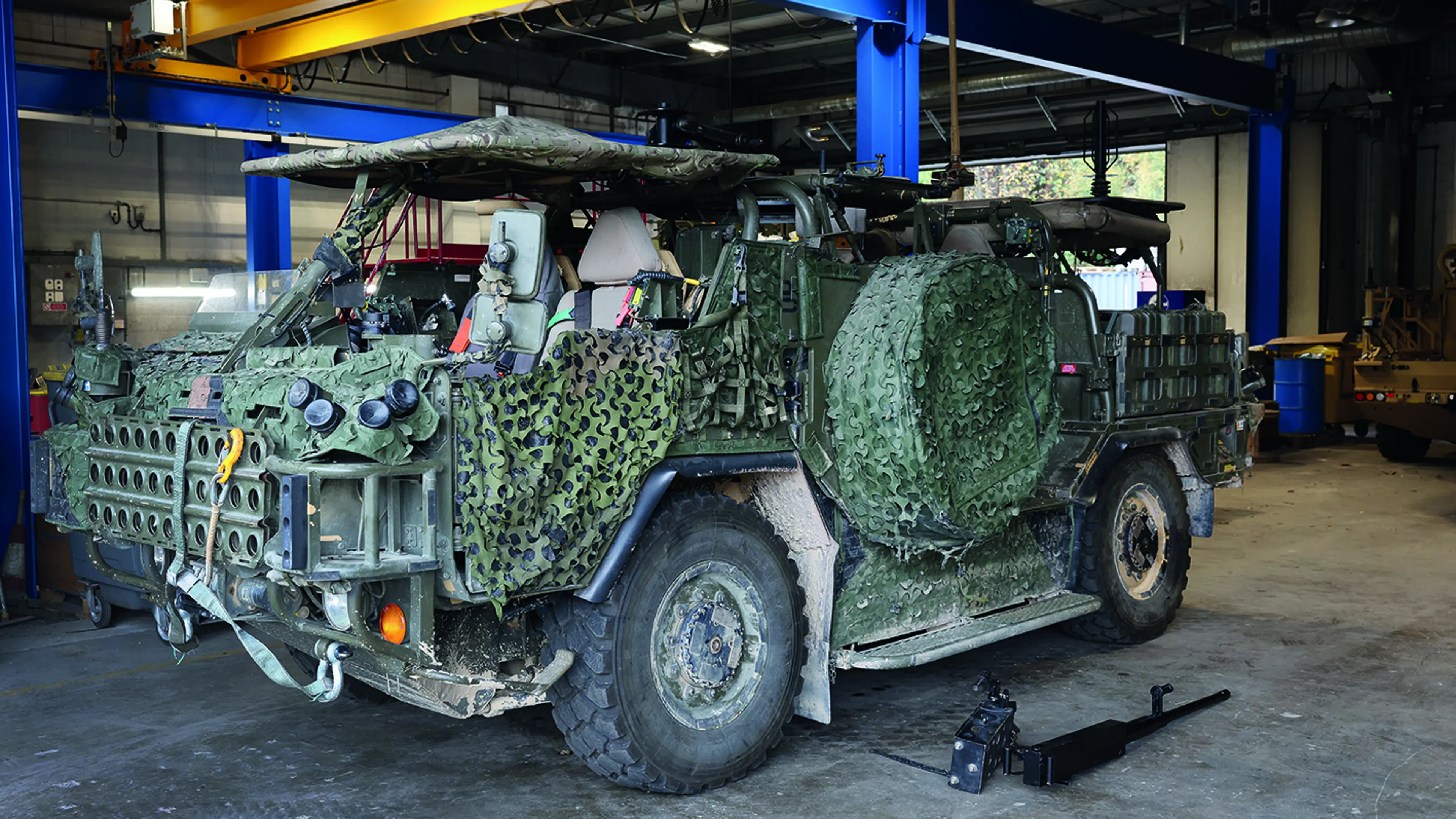
Next-gen camo
Magnetic camo
ATU teams have been testing a removable camouflage ‘jacket’ for army vehicles that pulls off and on quickly and has a thermal fabric inside that reduces the vehicle’s heat signature, reducing the threat from lurking enemy drones.
The testers found the effectiveness of the Velcro used to fix the cam sheets was reduced when they became plastered in mud, so if and when the kit is procured, they recommended magnetic plates be used instead, or a combination of magnets and Velcro.
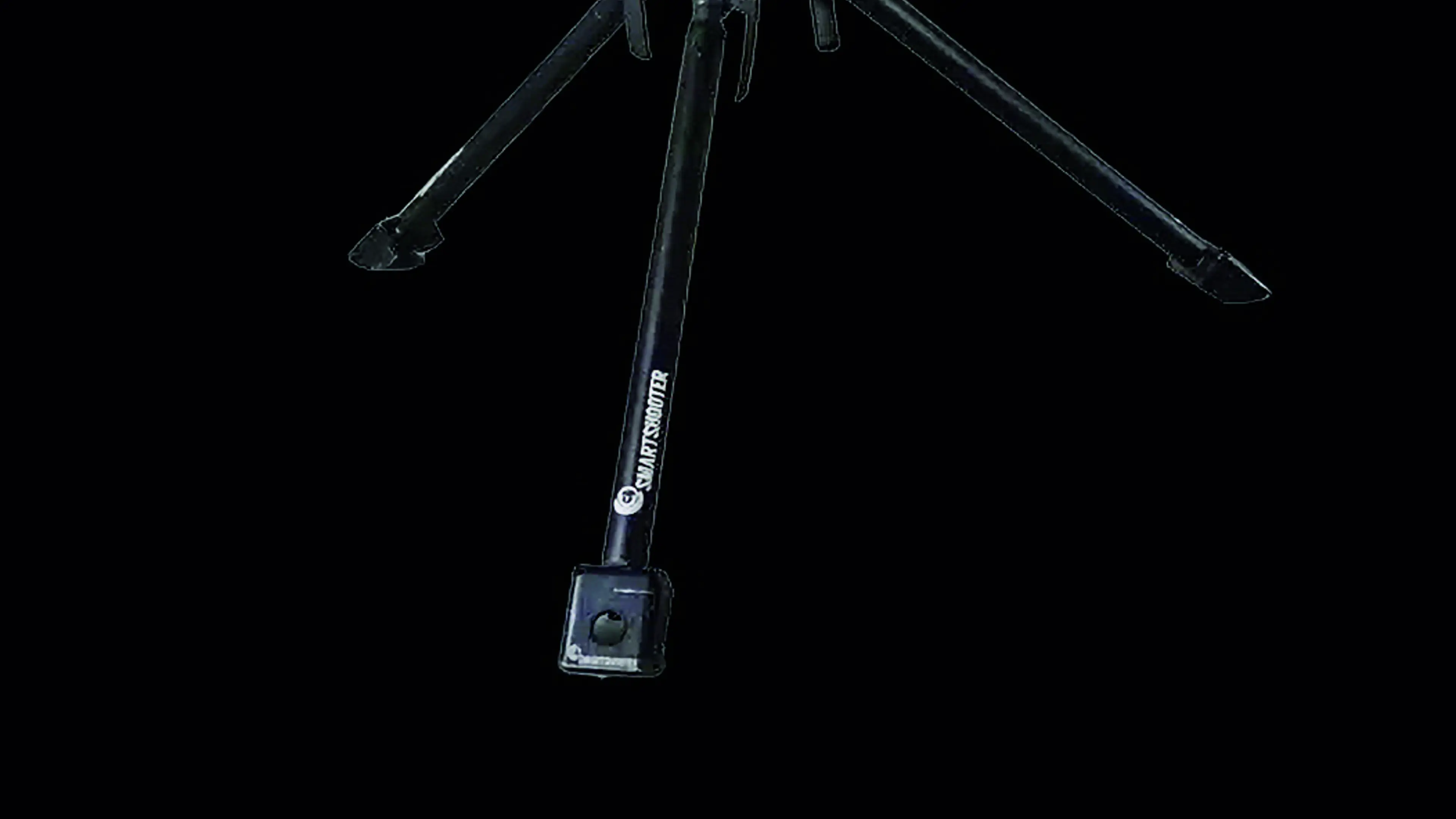
New Smash sight system
Remote-controlled Smash
The ATU are conducting trials to evaluate the performance of the Smash Hopper – an upgraded version of the counter-UAS gun sight that’s already in service.
It has been made into a semi-autonomous remote weapons system that can be controlled and fired by a soldier via a tablet. It can operate from a tripod (pictured), fixed mast or lightweight vehicle mounting.
