
It was a fork in the road moment – a realisation that military life was not for me and that career aspirations forged from a parade of Sly Stallone movies needed another look. The epiphany happened during a summer camp at a blustery military base in the depths of Cambridgeshire.
As a teenage cadet, I was in the front rank of an inspection as a warrant officer paced the line of youngsters on their final parade. He stopped and glanced at me as I stood to attention.
“Do you like orange juice?” he asked, perplexing an already nervous teenager with his bizarre question.
“Yes sir.”
Such were my nerves, I sounded like wee Scooby Doo on helium.
“I thought so,” he replied. “You’ve got it all down you.”
And with his pace stick tucked under the arm of an immaculately pressed shirt, he moved on down the line.
The parade collectively sniggered, but I didn’t care. Military standards might have been a challenge for this clumsy teenager but I’d been on night exercise, hammered the ranges with the cadet version of the SA80 and had a week-long stack of fun.
Later, two colleagues from the camp who didn’t have orange juice all over their uniform did serve their country – a young woman enlisted in the Royal Navy and went on ops, while a good friend joined the Royal Air Force and saved lives as a doctor on Afghan medevac flights.
My own tenure influenced a career in defence journalism. The cadet forces, by all accounts, hold a unique position, straddling both the Armed Forces and civvy street. While military based, they are not an official recruitment arm, promoting the likes of life skills and citizenship that are applicable anywhere.
Yet ask those on any parade night if they want a career in uniform and a fair slice will say yes. With this is mind, it is not difficult to understand why a significant drop in central government funding to the Army Cadet
Force is causing some concern – particularly with the reality that the Regular ranks are already understaffed.
The situation has been deemed so serious that 26 honorary colonels of the organisation have signed a letter to ministers warning that the cuts will have serious consequences. They maintain that the reductions – overseen by both the Conservative and Labour administrations – amount to a real-term hit of 50 per cent when compared with 2020.
The leaders point out that cuts are affecting allowances for adult volunteers, testing goodwill and impacting on the quality of experience for youngsters. There are currently some 70,300 Army cadets – accounting for more than half the membership of all Armed Forces-affiliated organisations.
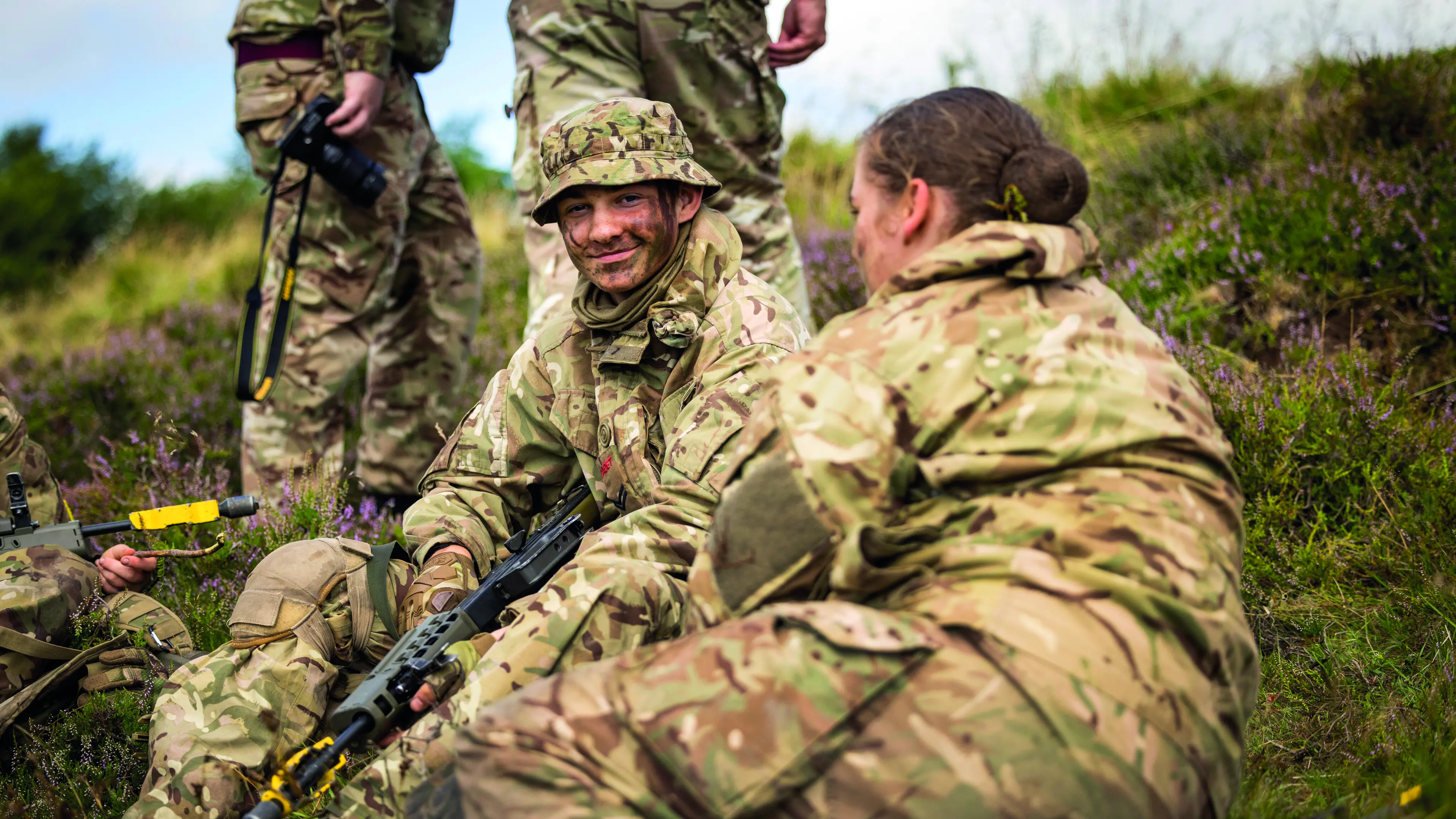
And the ACF has seen a ten per cent rise in joiners since the coronavirus pandemic. Victoria Carr – a Reservist lieutenant with the Intelligence Corps, civvy street primary school headteacher and senior research fellow at the Centre for Army Leadership – has recently produced a paper on cadet forces and their impact.
She is concerned the reductions could hit both recruitment and – critically – the military’s relationship with wider society.
“Bringing in new blood is important but there is a bigger picture here,” she says.
“Even if a young person doesn’t end up joining the Armed Forces, they gain life skills as well as an understanding of the military and the place it holds.
“This means, for example, a former cadet is more likely to be sympathetic to Reservists in the workforce should they eventually become a company boss or even supportive of their own children if they choose to join.
“My son, Tom, is a case in point – he was in the ACF, attended the Army Foundation College Harrogate and is now serving in the Royal Engineers.”
Overall, she concludes that there is a solid bang-for-buck return on the MoD’s annual cadet forces investment. In her paper, she accepts the reality of competing defence priorities with tightening budgets but flags a University of Northampton study, which suggests a threefold return on every pound spent in terms of a young person’s skills and future employability.
A hit on recruitment is highly likely, the academic maintains. “You need a suite of ways to bring people into the fold – both online and in the physical world and the cadets form an important part of that mix,” she adds.
Figures certainly bear out Lt Carr’s assertion. According to recently retired brigadier Stuart Williams, whose last role was Deputy Commander Cadets, those attending youth groups could account for a quarter of 2,000-strong intakes at Harrogate.
“I’d be very surprised if that number was not a lot more in some years,” he tells Soldier.
“But while many young people who are involved want to pursue an Armed Forces career, civilian employers, colleges and universities will all look favourably at membership as it brings a great deal.”
While declining to publicly comment on the funding cuts, Brig Williams – who is now CEO of the East Midlands Reserve Forces and Cadets Association – urged units to bolster their links with cadets as much as possible.
“This can be, for example, as simple as getting troops to speak to cadets,” he adds.
“They love nothing more than meeting reallife soldiers – the more the engagement, the more people will think about joining.” Personnel whose career in uniform started in Service-affiliated youth groups are numerous.
The most high-profile of them includes outgoing Army Sergeant Major WO1 Paul Carney, who believes he benefited from exposure to military life during a brief tenure with the Sea Cadets growing up in Portsmouth.
He maintains that a healthy programme for young people is crucial.
“This is obviously a personal view, but I never understood how some have been advocating the creation of a new form of national service on one hand, and then endorsing cuts to cadet funding,” he says.
“The ACF and other organisations are great for teenagers interested in a career as you are exposed to weapons handling, drill and the rank structure.
“But I’d also agree that the cadets are a way of promoting awareness of the military in society – and this is important at a time when the Armed Forces are smaller. You only have to look at the Regular Army, which has shrunk by a third in the 27 years since I joined.”
The gap between the military and civvy worlds has certainly widened with a smaller Armed Forces template and fewer people with connections to the Services.
With budgets eye-wateringly tight, however, the debate about priorities on cash distribution is only likely to intensify.
Defence was never going to be an exception to the fiscal challenges, whatever shade of government was elected.
In her paper, Lt Carr points to different models of cadet schemes in other countries, from an officer-inspired scheme in the USA to a tougher, compulsory initiative, run alongside school studies in Singapore. She suggests that studying these templates could help inform discussions about the future.
But as a teacher and soldier, seeing the impact of tough economic times through both prisms, she suggests a solution is quickly needed.
“With organisations for young people generally now depleted, we are potentially facing a situation that is going to impact the country more widely,” she concludes. “You are reducing the ability for early intervention for those in need – and that is something that should concern us.”
RESERVIST Cpl Mark Bailey (AGC (RMP)) and his daughter Lois have both seen the value of ACF service – choosing to sign up at the same time.
The NCO, who wanted to join the Royal Marines as a youngster, took the plunge to volunteer for the Army in his late thirties and decided that becoming a cadet instructor was “the next logical step in giving something back to wider society”.
Meanwhile, 12-year-old Lois has recently enlisted in her school Combined Cadet Force – and has not ruled out service in the Armed Forces as a career. Northamptonshire-based Cpl Bailey – the unit PTI at 116 Provost Company and a civvy massage therapist – said: “I’ve done all the relevant joining bits for the ACF and I’m going to become an instructor soon.”
The 45-year-old added: “Young people gain so much from these organisations in skills and confidence, even if they don’t go on to join the military.” Lois said that the ACF is so far living up to all her expectations.
“We’re doing our weapons handling test at the moment so that we can shoot on the ranges,” the youngster explained. “I’m excited to be trying this and I want to make sure I can do it safely.”
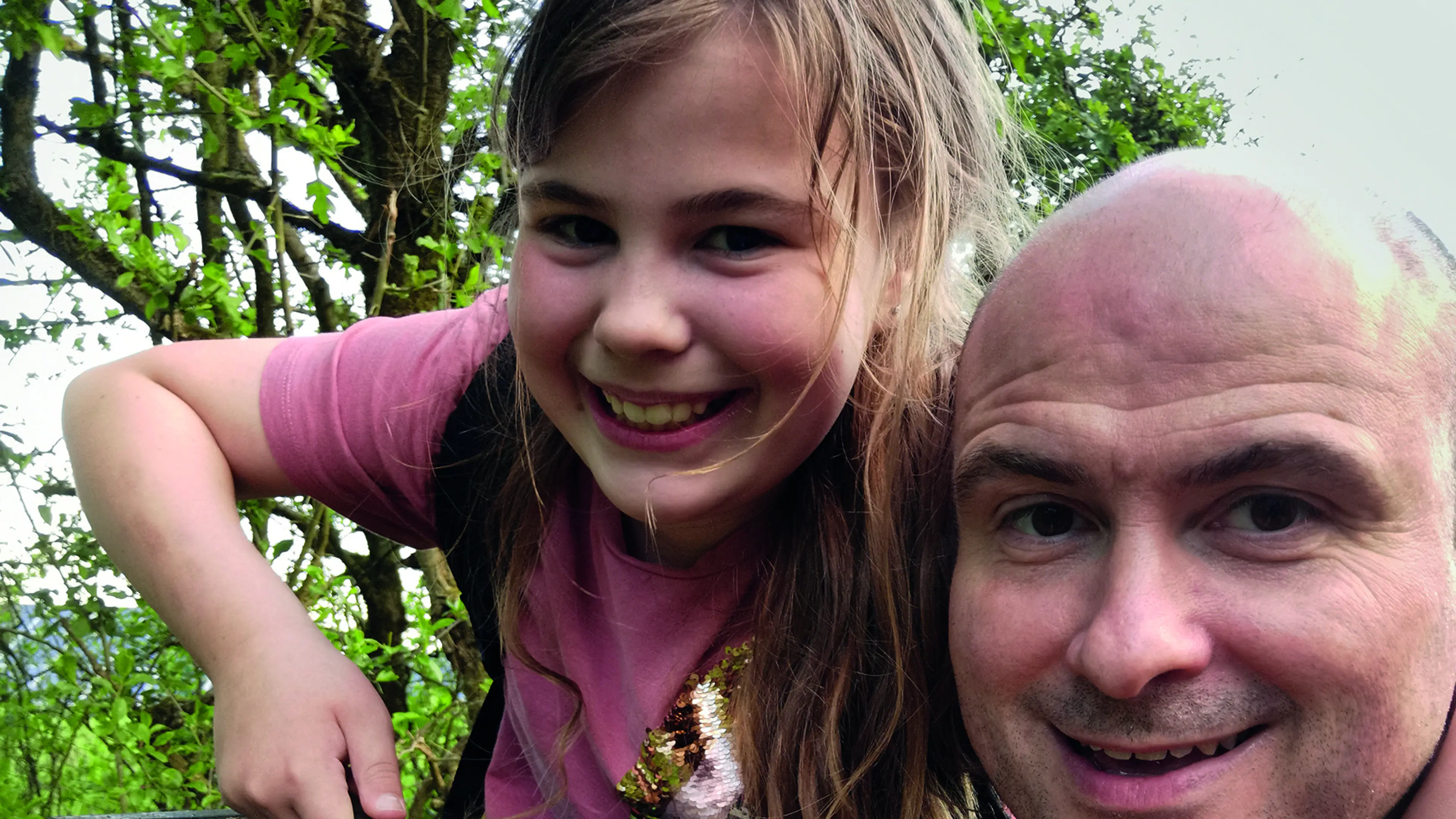
The Baileys
