
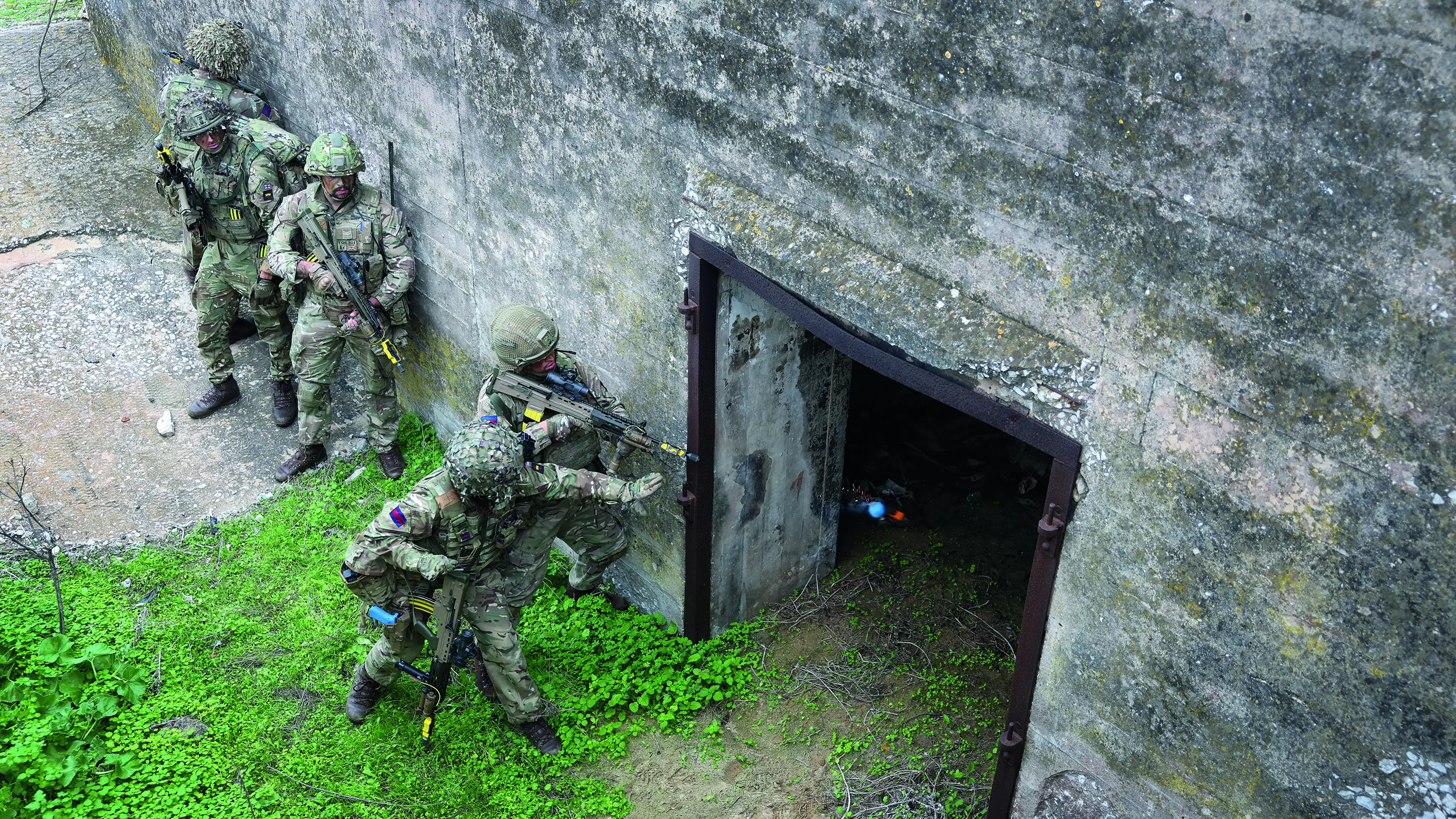
A voiceover artist and theatre stage manager in his day job, Gdsm Rory Jakeman is telling Soldier how deploying to Gibraltar has helped him forge a strong bond with his fellow reservists when sudden gunfire cuts the conversation dead.
A patrol has stumbled across an enemy position on the perimeter of the Buffadero training village and his section rush to offer support.
It has been a similar situation for the past 36 hours as the London Guards face a scenario in which a free-thinking proxy force is hell-bent on disrupting strategic national infrastructure.
Fighting has been conducted in the thick vegetation surrounding the buildings as well as in the urban environment itself, while a network of subterranean corridors and disused military storerooms has added to the complexity of the battlespace.
And the threat has been ever present – both day and night.
Once our visit concludes the enemy is set to withdraw to Gibraltar’s famed tunnel systems to target data storage hubs and the guardsmen will be charged with flushing them out.
This will be conducted in a one-and-a-half-kilometre tunnel that will later have its power cut – meaning those at the sharp end will rely on night optical devices to help get the job done.
The serials come in the second week of their annual training package – the first of which included adventurous training and historical tours – and has seen two companies deploy at the tail end of a busy year.
Ceremonial duties formed the primary focus for a large chunk of 2025 as two half-companies were involved in the King’s Birthday Parade. Another cohort also participated in the state visits of the President of the United States and the French President. And, in a first for the battalion, two guardsmen had the honour of being on guard at Buckingham Palace.
“We have had the most amazing year,” says Commanding Officer Lt Col Russell Lewis (pictured right), who served as a regular in The Parachute Regiment for 20 years and was awarded the Military Cross for leadership and gallantry in Afghanistan in 2008.
“It was our biggest ceremonial contribution, and that was our priority. Now we are focusing on the green side, and it is important we do not let those skills fade.
“Every other year we get an overseas exercise and this time round we were given Gibraltar. Most of us have not been here before and it is both a brilliant and unique area.
“Yes, it is small, but with some creative thinking we can do incredible training.
“I want these to be realistic serials. We had six people deploy on the last Estonian rotation and they weren’t doing made-up scenarios out there.
“Everything being based on countering the Russian threat has made us sharpen our focus, and hopefully we can demonstrate to London District, and the wider army, what we can offer.
“This has been some of the hardest training our soldiers have done. On a normal weekend, they are in and out in two days, so this is about how to keep going.
“We want to create a learning environment. Running around bellowing at people does not work; we are able to point out what they did wrong and how they should do things – and these soldiers are quick learners.
“Nothing here is a test.”
Fortunately, the London Guards boast a healthy cohort of ex-regulars with vast experience to impart.
Capt Jordan Whiteman, company commander of G Company, served for eight-and-a-half years with the First Fusiliers before leaving in February. He attended his first drill night with his new reserve unit the very next day.
The 30-year-old has previously deployed to Canada, Estonia and Kosovo, as well as serving on Op Interflex, but this is his first time in Gibraltar.
“The biggest point everyone has observed is how quickly the terrain transitions,” he explains.
“You go from thick, dense scrub into urban and subterranean environments and that requires a lot of resetting. You need a larger soak period to assist with the next part of the battle plan – we don’t get a lot of that when training in the UK.
“This area is only 350 metres in length, but it takes a long time to clear. Some of the troops expected it would take an hour, but they were still going four hours later – that has caught them off guard.
“The guardsmen are also facing an enemy that does not stay in situ. They are looking to exploit our flanks, any tiredness or a lack of patience, so there is much to think about.
“We did a lot of preparation in the build-up and shaped our training around what we would be doing here. To be successful we need NCOs who can use initiative and think for themselves, and they have quickly adapted to the environment.
“It will be interesting to see how they develop their TTPs when we go full subterranean.”
A platoon sergeant in G Coy, CSgt Neil Forde served for 14 years in the Welsh Guards, which included tours on Op Herrick and Op Toral, as well as two deployments to the Falklands. He also qualified as a jungle warfare instructor.
Like Capt Whiteman, he didn’t want to turn his back on military life when he left the full time army and immediately joined the London Guards as a reservist.
“It has been interesting,” the 37-year-old says of the transition. “I went from the regulars to a civvy job working in finance and later moved to Jersey.
“But I have been able to come over for training weekends and big exercises.
“This is my first time in Gibraltar.
“Tactically, it is very conventional, and we have the complexity of the urban environment to think about.
“We’ve used drones to scan the area to get an idea of the enemy picture, as well as the battlespace, and that has helped make informed decisions.
“The enemy has been a lot more free-thinking – this is real-world stuff. We’re not just facing two guys in the open and have to consider where they are going and what they are planning.
“We’ve also had Atak kit, which has been great in terms of situational awareness. Having things like that keeps us up to date with what the regular army is doing.”
The NCO is also impressed with the way his counterparts are adapting to the challenges posed and believes they will take a great amount from the experience.
“They all have normal day jobs, and some are performing at quite high levels across areas such as government and technology,” CSgt Forde continues.
“It is great that they are willing to come and do this in what is their spare time.
“In terms of skills, there are a few things reservists will inevitably fall behind on when compared to the regulars, who are doing this all the time.
“But give them the training opportunity and they are pretty good.”
1st Battalion, London Guards was formed three-and-a-half years ago, having previously been known as The London Regiment
It is a Guards reserve battalion with four companies across London from different cap badges – Coldstream, Grenadier, Irish and Scots Guards
They train individually every Tuesday, with the battalion coming together for a training weekend each month
Two companies deployed to Gibraltar – one formed of Grenadier and Coldstream Guards, the other from Scots and Irish Guards
Like their regular counterparts, they combine front-line infantry skills with ceremonial duties
The unit boasts a rich array of civilian professions – from opera singers and politicians to black cab drivers and carpenters
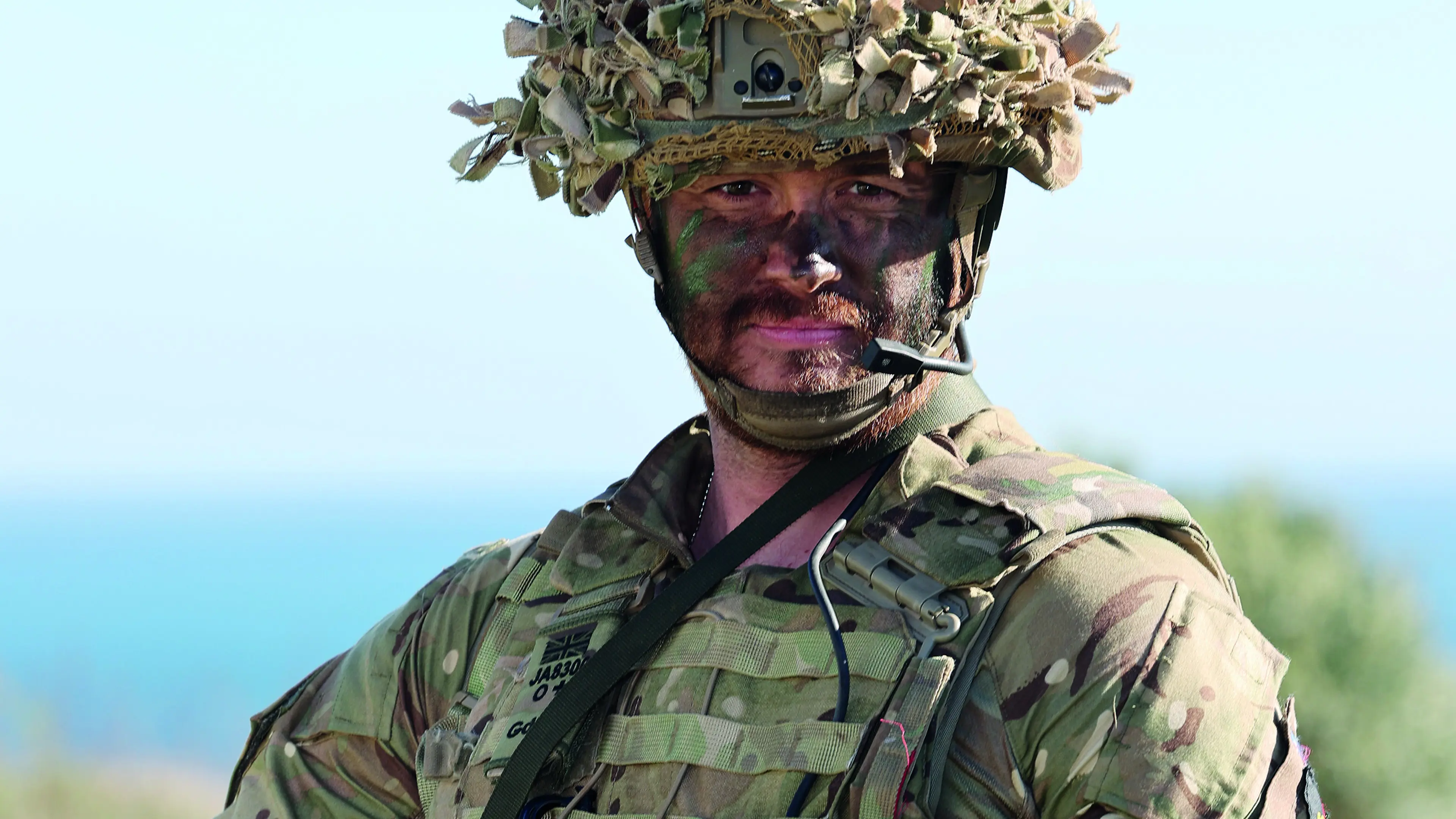
Name: Gdsm Rory Jakeman
Length of service: Five years
Day job: Voiceover artist and theatre stage manager
Why did you join?
I have family ties. My great-grandfather was in the army, and I have a cousin who served in Afghanistan with The Royal Green Jackets. I wanted the challenge of trying something new and it is completely at the other end of the spectrum when compared to the events world.
Describe your highlights to date.
I did Ex Wessex Storm with the Scots Guards in 2023 and have taken part in Trooping the Colour and the Lord Mayor’s Show. There is a good balance between the ceremonial and green sides. Also, in my day job, I was a stage manager for VE Day 80: The Party at the Royal Albert Hall, so it was nice to mix both worlds. The fact it was such an important anniversary added to the appeal – it was one of my highlights of the year.
How have you found the Gibraltar package?
The adventurous training was great and the historical tour, looking at Gibraltar from the very start of the Peninsular Wars, offered amazing detail. It was great to have that alongside the green training – nobody wants to be beasted. We all work hard and I’m often abroad and travelling with my job, so it has been good to have some time to develop our cohesion. I’ve known these guys for a few years, and it is important to have the experience regulars get day in, day out.
What lessons have you learned?
You realise how much you rely on the other blokes to get you through. As a civilian I am self-employed, but here we are working in a team, section or platoon and you must be a cohesive unit. It can be grim, but having your friends around you makes it easier.
‘Everyone has a part to play’
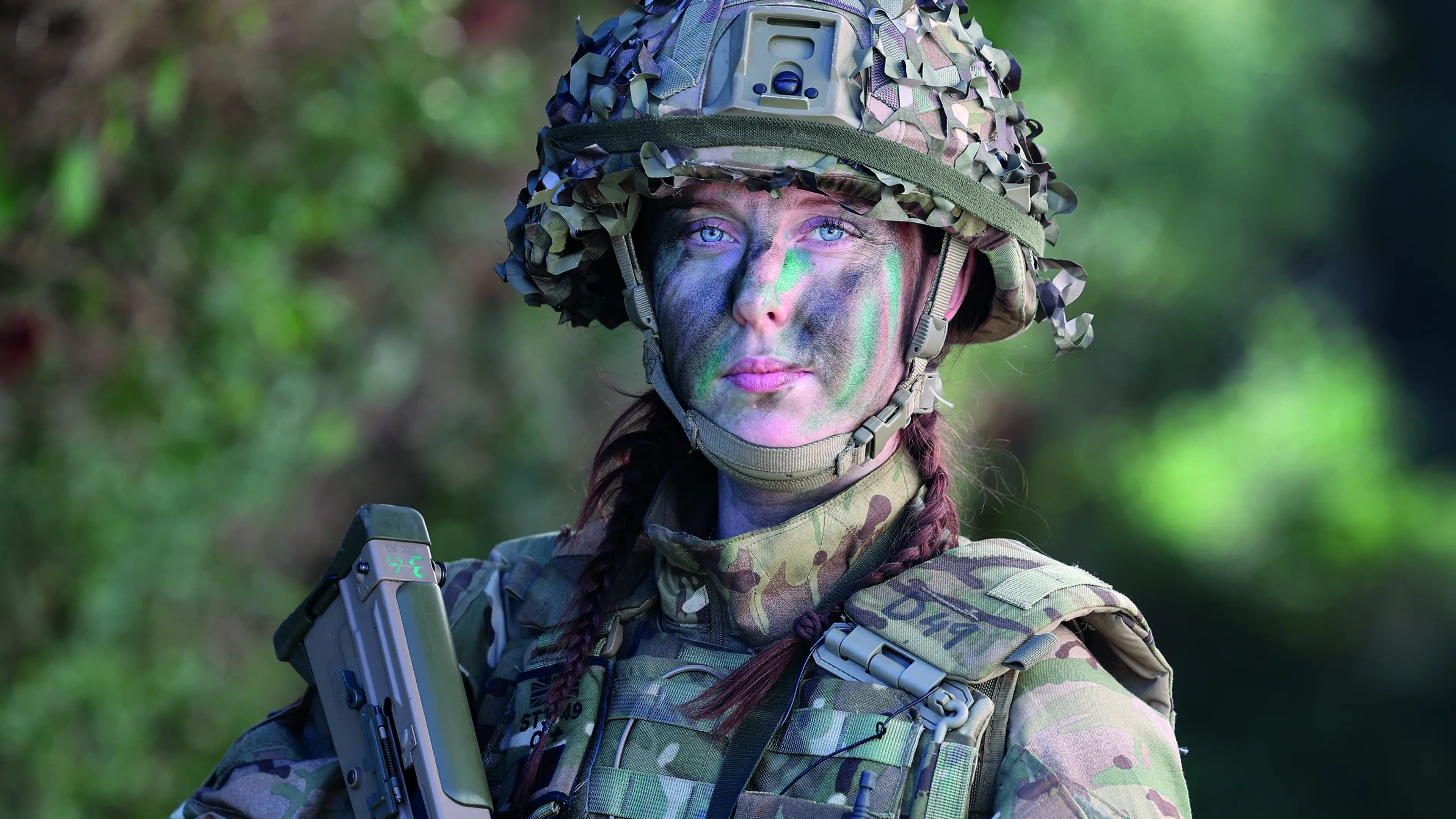
Name: Gdsm Tiggy Stockbridge Age: 23
Length of service: Four years
Day job: Medical student based at various London hospitals
What was your motivation for serving?
I wanted to get more experience before joining the regular army. From May, I will be a mental health nurse in the Royal Army Medical Service, so I wanted to know what it is like as a soldier.
How have you found the training here?
We walked up to the area and started taking casualties almost immediately and that made you realise how quickly you could be taken out and how important medics are. We’ve been clearing buildings; you can see the thinking behind it and that everyone has a part to play. Even though it is a small area, clearing through can take a long time so command and control must be on point.
What do you like about the reserve?
It is a break from my life, and completely different to what I do – I’ve gone from a ward to coming out here. I enjoy it, and it has been a chance to get exposed to the army early. I’ve always loved the military, and joining as a mental health nurse allows me to bring the two together.
