
There is a saying in the army that, just like a good schoolteacher, a first section commander will never be forgotten by their recruits in phase one training.
The junior NCO responsible for taking young civvies through the basics of military life, looking after their wellbeing and ensuring they make the best transition into uniform has a seminal impact.
These leaders can, in no uncertain terms, be the making – or breaking – of a career.
“Honestly, a decent section commander is going to stay with a recruit for life,” says SCpl Tommo Thomas (RHG/D), who is responsible for getting troops ready for the leadership role at the Army Instructor School, Pirbright.
Out on the ranges and beneath the slate-grey winter skies of the camp, he surveys a group of students going through their qualifications to supervise live firing.
“Being a section commander at any training establishment can be a hard posting with early starts, late finishes and a lot of time on exercise,” he adds. “You have to be a role model to a group of people who can have different levels of life experience – with 18-year-olds and those in their 30s in the same cohort.”
He pauses for a moment as weapons are loaded, pulling out squidgy yellow ear defenders from his trouser pocket.
“It’s tough, but satisfying,” he concludes.
These are wise words indeed – and said with intent.
Along with his colleagues, SCpl Thomas is determined that trainee instructors are ready from the day they begin the role.
They will have the benefit of knowledge drawn from a refreshed and more thorough preparation programme here in Pirbright.
And it is underpinned by a new pre-employment training course to ensure candidates meet demanding leadership and resilience standards.
Personnel then undergo an army version of the two-week defence instructor package, in Pirbright or elsewhere, and courses that qualify them for jobs such as exercises using blank ammunition, IED awareness and live firing. Some will provide them with recognised civvy qualifications.
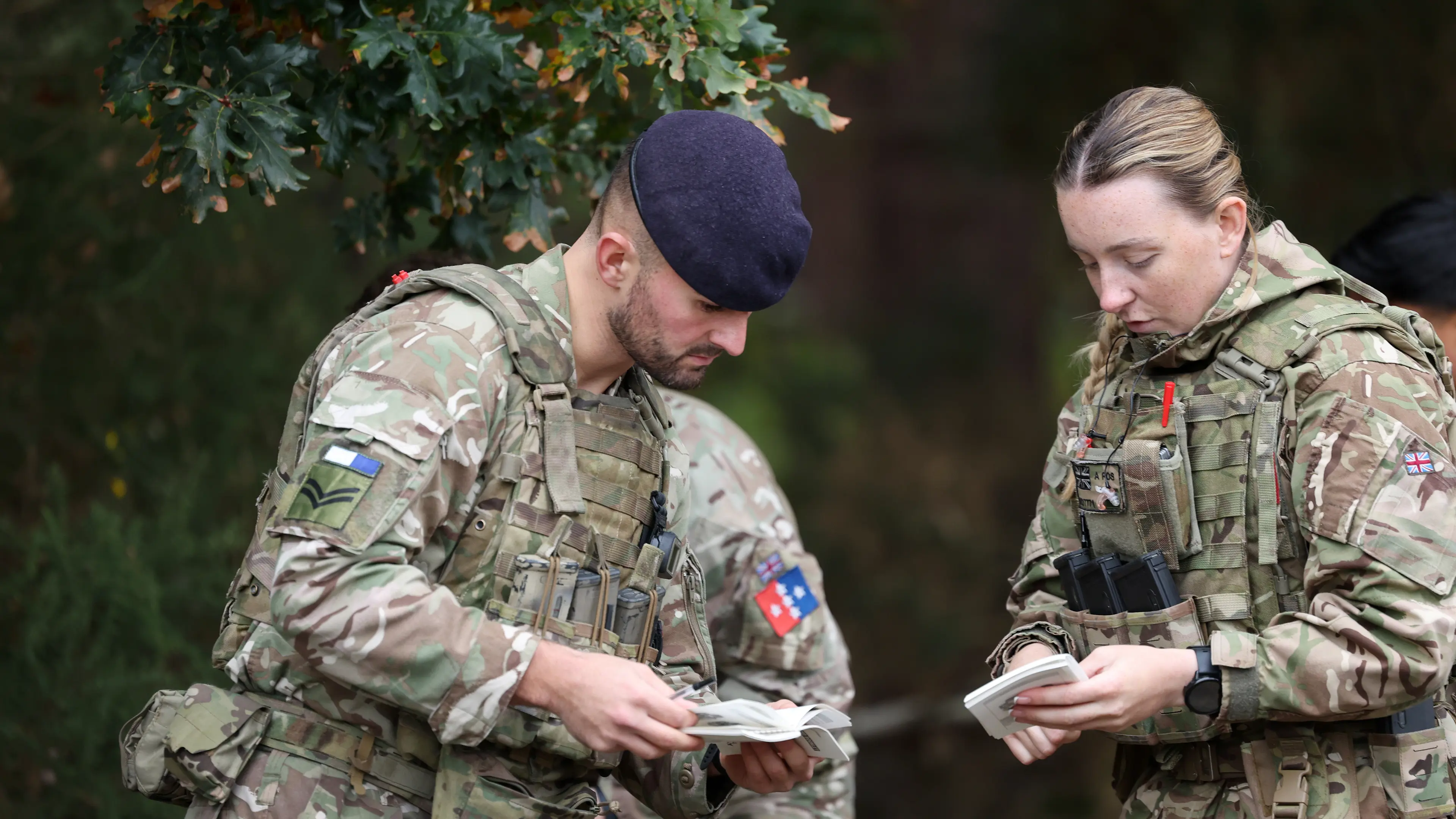
The junior NCOs certainly have the very best to help them as they take on the mantle of developing the army’s next generation.
Having expanded the school by 20 per cent in the past year, CO Lt Col Ed Thompson (RE) has focused on developing his own group of senior staff, who have decades of experience as well as service on ops in the likes of Afghanistan, Iraq and elsewhere among them.
“We need people who are going to get after the training culture and help us improve on it,” the officer tells Soldier from his headquarters at the school.
“As well as growing over the last few months, we changed our name from the Army Recruiting and Initial Training Command Staff Leadership School to the Army Instructor School – put simply, this better defines our role.”
Ensuring aspiring section commanders, who either volunteer for the role or are nominated by their chain of command, are fit for purpose has been a priority, he adds.
The new pre-employment package focuses on the behaviours expected of leaders while ensuring they are robust enough for the demands ahead.
“The course is followed by a package on mental resilience,” Lt Col Thompson continues. “Later on, the candidates also complete specialist qualifications, such as skill-at-arms and instructing live firing.”
Ultimately, the full training regime is designed to turn out rounded individuals. But the boss believes more can still be done – and that there are lessons to consider from allies putting training front-and-centre.
“I recently visited America – there, the US Army takes the top ten per cent of troops and uses them in both recruitment and training,” he reveals. “They want the very best people to help bring in the next generation and encourage them.
“There is a definite link between the two areas – selecting and then developing people.”
The CO’s ethos is embodied by his team, several of whom have donned uniform again and returned as reservists to help troops training the next generation.
SCpl Thomas is a case in point. Having served a busy Household Cavalry career he is back in the fold on a full-time contract and is assisting with delivery of the preparatory training course.
“I deployed to Northern Ireland and Iraq during 22 years as a regular – ceremonially, I was also on horseback at the King’s Coronation and have instructed our riders,” he adds. “But importantly for me, this role gives me the opportunity to impart that knowledge to our new section commanders, who will go on to help our recruits as they make that transition from civvy to soldier.
“Curiously, Pirbright is also where I began my service with the army all that time ago, so there is something symbolic in finishing where you began.”
As SCpl Thomas removes his ear protection – the range serial now complete – his aspiring section commanders are equally enthusiastic about their new role.
“Helping people through their phase one training is a great thing to be a part of,” says Cpl Laura Bradshaw (RAMS) as she takes a break from the firing point. “From a personal point of view as an NCO, however, it is also good to hone new skills on these courses and to get the right qualifications.
“I was really fortunate to have a great section commander at the start of my career – he was a good egg and it’s true they are somebody you remember.”
Fellow student LCpl Yahkeem William (RLC) agrees.
“Being here at Pirbright is great – you’re learning all the time,” he adds. “I’m looking towards a posting at ATR Winchester, so that is going to be my likely next move.”
It is – undoubtedly – a daunting time for these junior NCOs who will shoulder the demands of introducing the greenest of recruits to the tough realities of service life.
But with the best training, underpinned by the experience of those who lived some of the army’s most intense ops of modern times, they will be ready.
As well as assisting young section commanders, staff at the Army Instructor School have been expanding their footprint across the service.
Their host of other work includes taking their expertise to units to deliver training, and passing on their years of wisdom to aspiring military mentors.
Elsewhere, they have also been involved in Op Interflex – the UK-based action to prepare Ukrainian personnel for fighting against the Russian invasion.
