
It is a scene reminiscent of some dystopian sci-fi flick: a soldier has ditched his helmet and rifle in a desperate bid to gain speed and agility and constantly glances skywards as he sprints for cover among trees.
The drone that’s targeted him is relentlessly following his every step. He twists and turns, double backs on himself, veers suddenly at right angles and then, clearly panic-stricken, sprints as fast as he can along a rutted track.
But there is no escape. The Russian infantryman looks up for the last time, just as the drone drops the ordnance.
A cloud of dust and smoke clears to reveal him lying dead in the dirt.
It's a sobering piece of classified film from Ukraine that formed part of a development day from one of the Army’s latest initiatives to maximise the potential of its soldiers – the NCO Academy.
Lauded by the then Chief of the General Staff, Gen Sir Patrick Sanders, when it was launched in 2023, its primary mission is to equip NCOs with the skills they need to meet the demands of the modern battlefield.
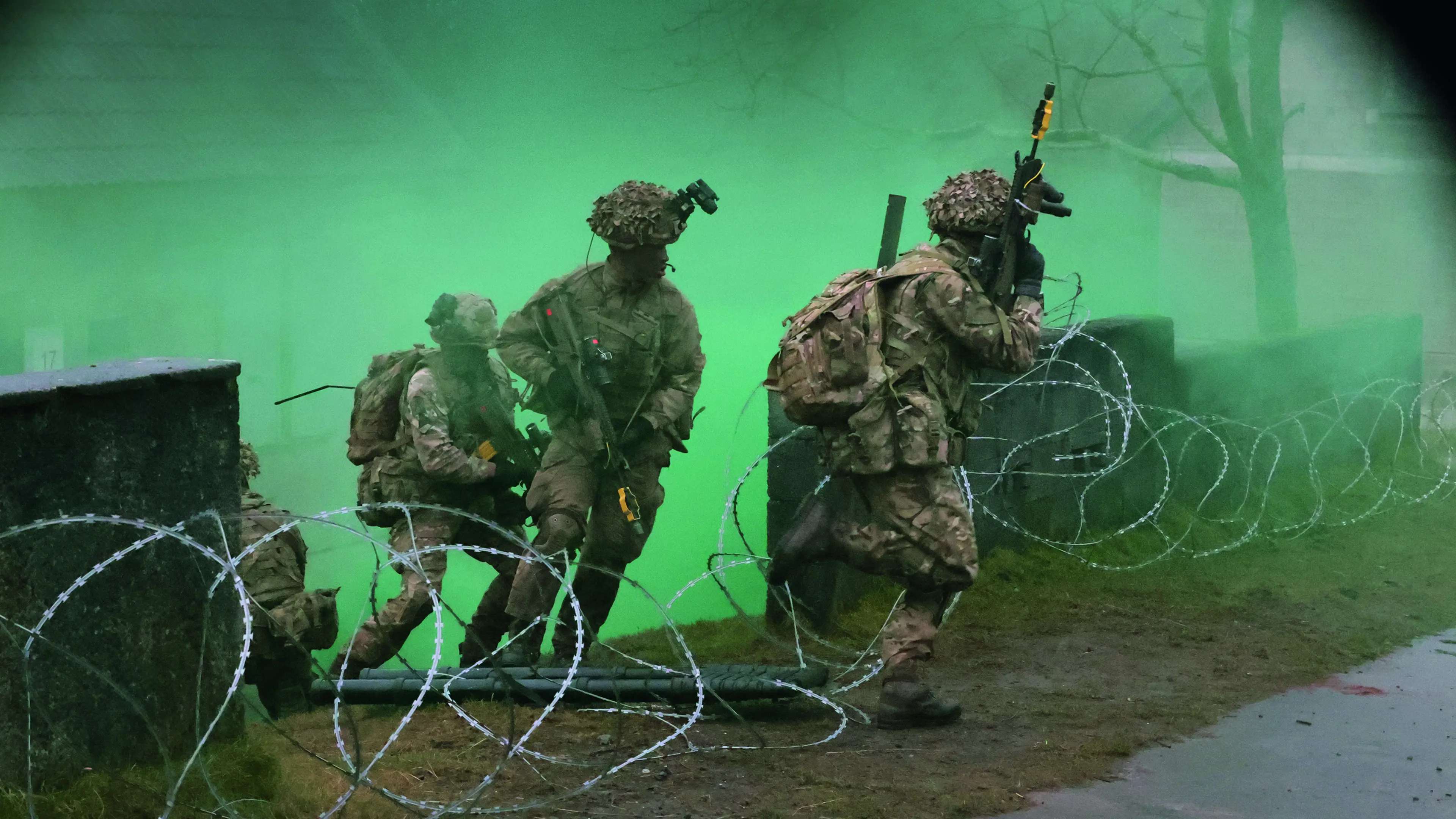
Army’s latest initiative aims to maximise the potential of its soldiers
The idea was partly inspired by the US Army, which introduced its NCO Leadership Center of Excellence in 1972 – an organisation now responsible for a network of academies across the country, along with one in Germany and another in South Korea.
The British version is, unsurprisingly, a less well-funded and more modest affair.
Its handful of staff occupy a few back offices at the Royal Military Academy Sandhurst with no other dedicated facilities to call upon.
But typically, the team make the most of what they have by drawing on a substantial pool of expertise and resources from across defence. And they use them liberally to furnish development days for NCOs at sites across the UK, consisting of lectures, briefs and working groups with senior Service personnel and civilian SMEs.
There were half a dozen staged in 2024 and more are planned for this year.
Soldier sat in on one session in Aldershot, which included the Army’s lessons exploitation team explaining how the Ukraine war is inspiring innovation across the ranks.
There was also an illuminating talk from a Royal Army Medical Service officer on how sleep affects combat performance, plus a stint on the importance of coaching and mentoring.
Education is a key part of the NCO Academy’s role, too, and it is now responsible for administering the chartered manager degree apprenticeship (CMDA), which provides senior NCOs with the opportunity to acquire an honours degree in professional management.
The academy has delivered its first RSM-designate preparation course at Pirbright for 40 personnel, and launched its Level-up Leadership programme, which aims to develop the skills and knowledge of senior soldiers with a mix of face-to-face and online tutorials.
Some 40 corporals have also been enrolled on a civilian-recognised business studies diploma course.
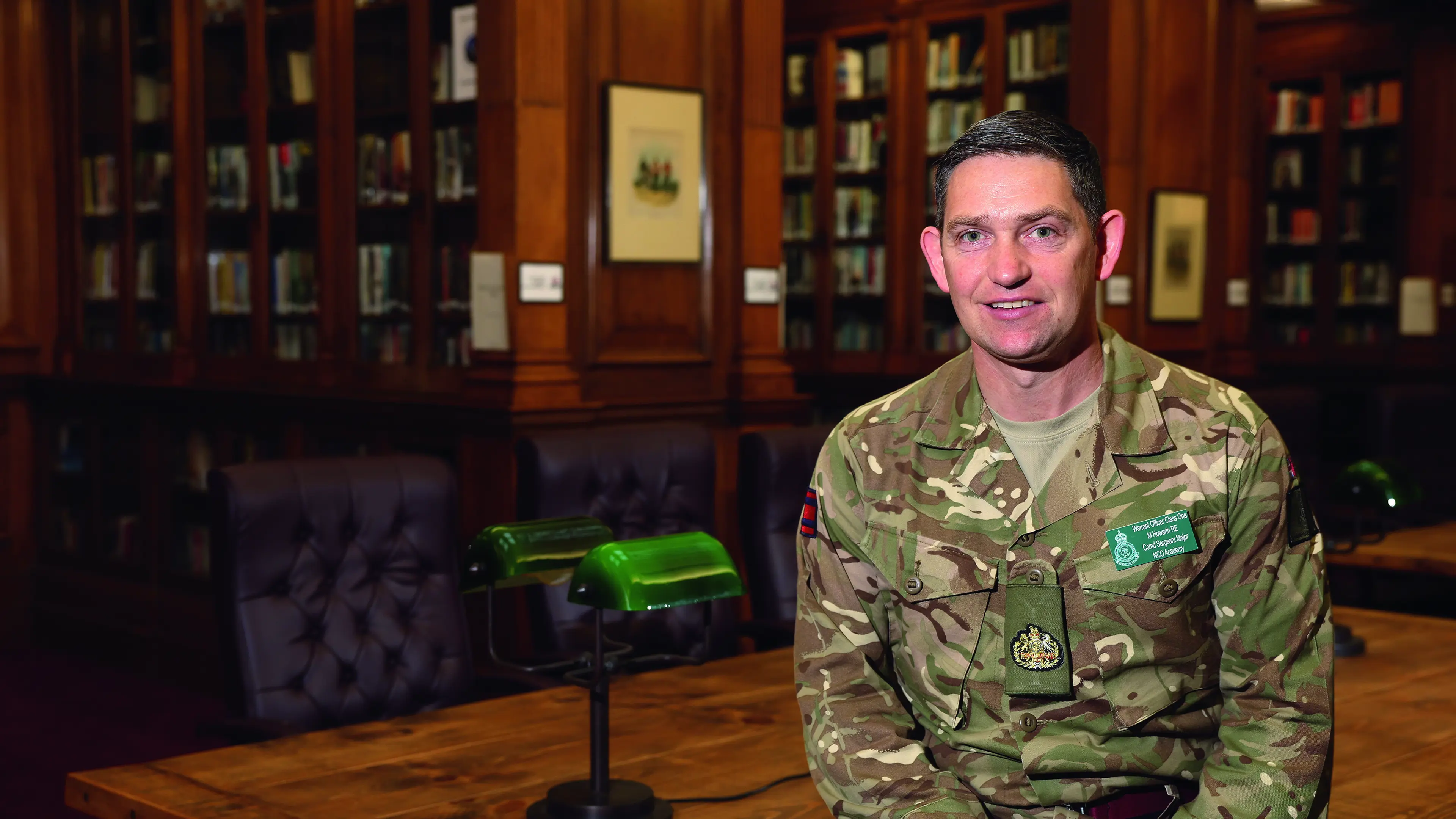
NCO Academy Command Sergeant Major, WO1 Matty Howarth (RE)
Soldier talked to the NCO Academy Command Sergeant Major, WO1 Matty Howarth (RE), to find out more…
To ensure our people remain our competitive edge, and feel valued and invested in. The original catalyst was the fact the modern battlespace is becoming far more complex, with big decisions being taken at lower levels. These usually need to be made quickly, so all NCOs must be trained, equipped and prepared. It’s integral to the Army’s current ambition of tripling fighting power by 2030. We’re also about reinforcing the fact NCOs are role models. They must lead by example.
Through a combination of online and physical activity. We focus on personal, professional and operational development. Education is vital too. Networking and building relationships are crucial and the development days bring together NCOs from across the Army. We had 130 in Aldershot recently from 40 different units.
That’s so important for spreading good practice, knowledge and experience. We tend to only reach out to our own cap badge, but the development days and fortnightly online Tea and Toast Talks (Soldier, November) bring NCOs together. And we arm them with vital information from operations across the world by working closely with the Land Warfare Centre (LWC). CBRN is a great example. During a recent talk one speaker revealed that more than 400 CBRN incidents had taken place in Ukraine during August alone. Not one person in the room knew that stat, but imagine how crucial that could be to any unit deploying in a time of crisis. The LWC’s lessons exploitation team has lots of information of this type and we ensure personnel receive it loud and clear.
We are focused on NCOs but everyone is welcome at our events, Regulars and Reservists alike. We had two development days in Lichfield and Grantham recently and one of them was on a Saturday to encourage Reservists to attend. That will be a regular feature on our schedule in 2025. Our Tea and Toast Talks also focus on NCOs – however, anyone can join and listen in to the conversation. The first one of these was attended by officer cadets to aid their development.
The day we visited revealed a surprising lack of awareness among NCOs about resources such as LWC identification cards, Defence Connect or even the Army Knowledge Exchange. Does this surprise you? As an organisation we push out a lot of information, especially online, and people sometimes don’t know what’s relevant to them so they get overwhelmed. The NCO Academy, especially during development days, points NCOs to the resources and tools most relevant to their roles.
Rank-specific pages on Defence Connect, containing useful information and links. We’ve also created a champions scheme, where motivated individuals promote the academy back at their unit. When they sign up we also ask them what coaching and mentoring experience or qualifications they have, as no one else across the Army is collecting this data. So we now have a pool of people we can reach out to if one of our members needs advice. Within two weeks of starting this I had about 40 people sign up to be champions.
Absolutely. One piece of feedback from our development days indicates that corporals often don’t feel well prepared for the jump to sergeant, especially from the management perspective, with the IT systems and people problems they face. We need to ensure our people feel invested in and valued, which helps with retention among other things. Out of 100,000 or so Regular and Reserve personnel, around 54,000 of them are NCOs – the largest single cohort. So why wouldn’t we focus on what they need?
For more information go to the NCA Academy page on Defence Connect
