When Ukrainian troops started telling British instructors about the threat posed by drones in the early stages of Russia’s invasion, few could have foreseen their macabre escalation becoming one of the conflict’s prime killers.
Far from the expert-operated, high-tech platforms that saw action in Afghanistan in the 2000s and 2010s, this new generation of unmanned aerial systems became weapons of the military masses.
Cheap, easy to produce in large numbers and straightforward to fly, the devices were soon dictating how forces on both sides lived, worked and fought.
The so-called one-way attack drone, in particular, soon became the icon of terror in the Eastern European war.
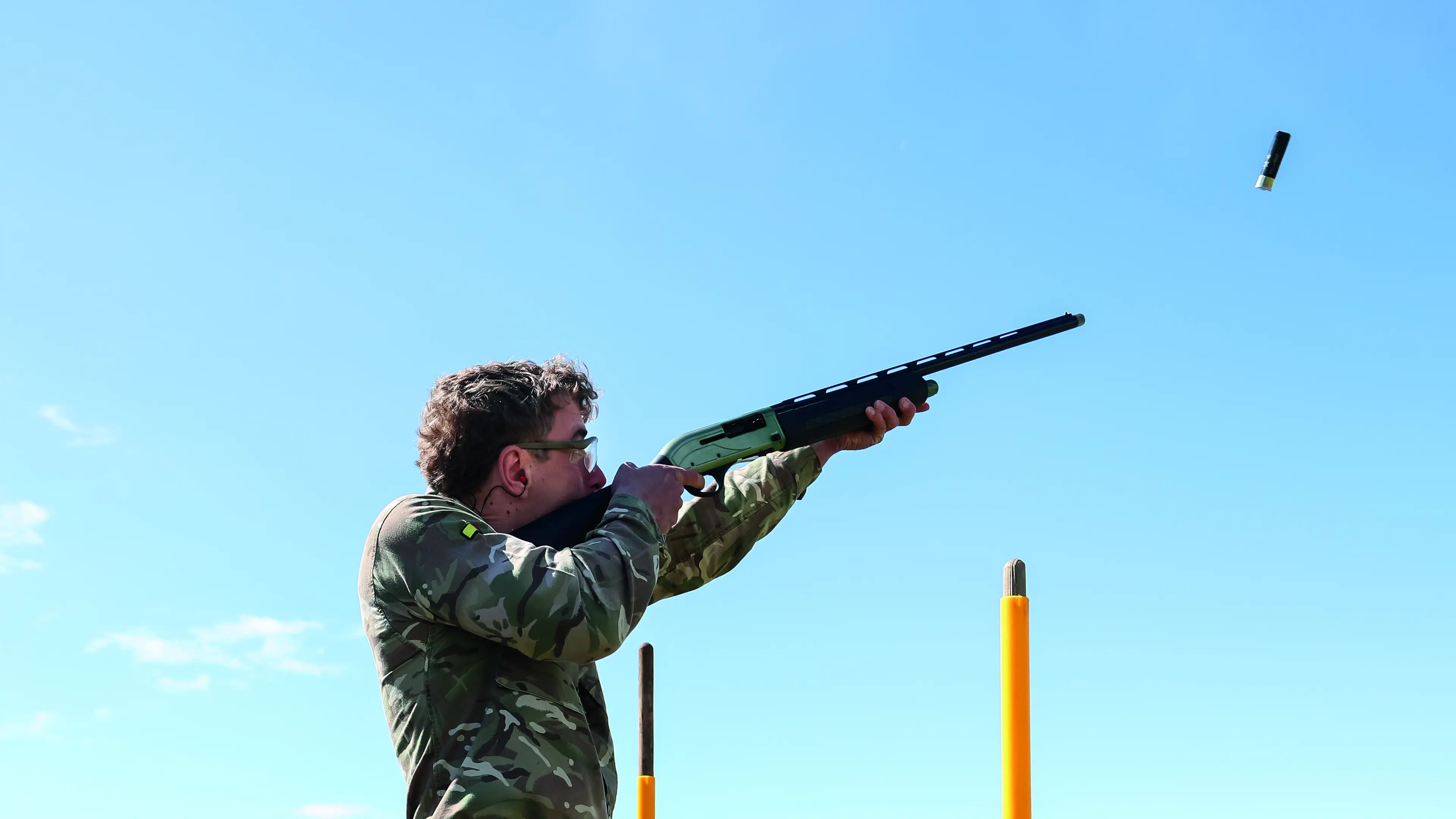
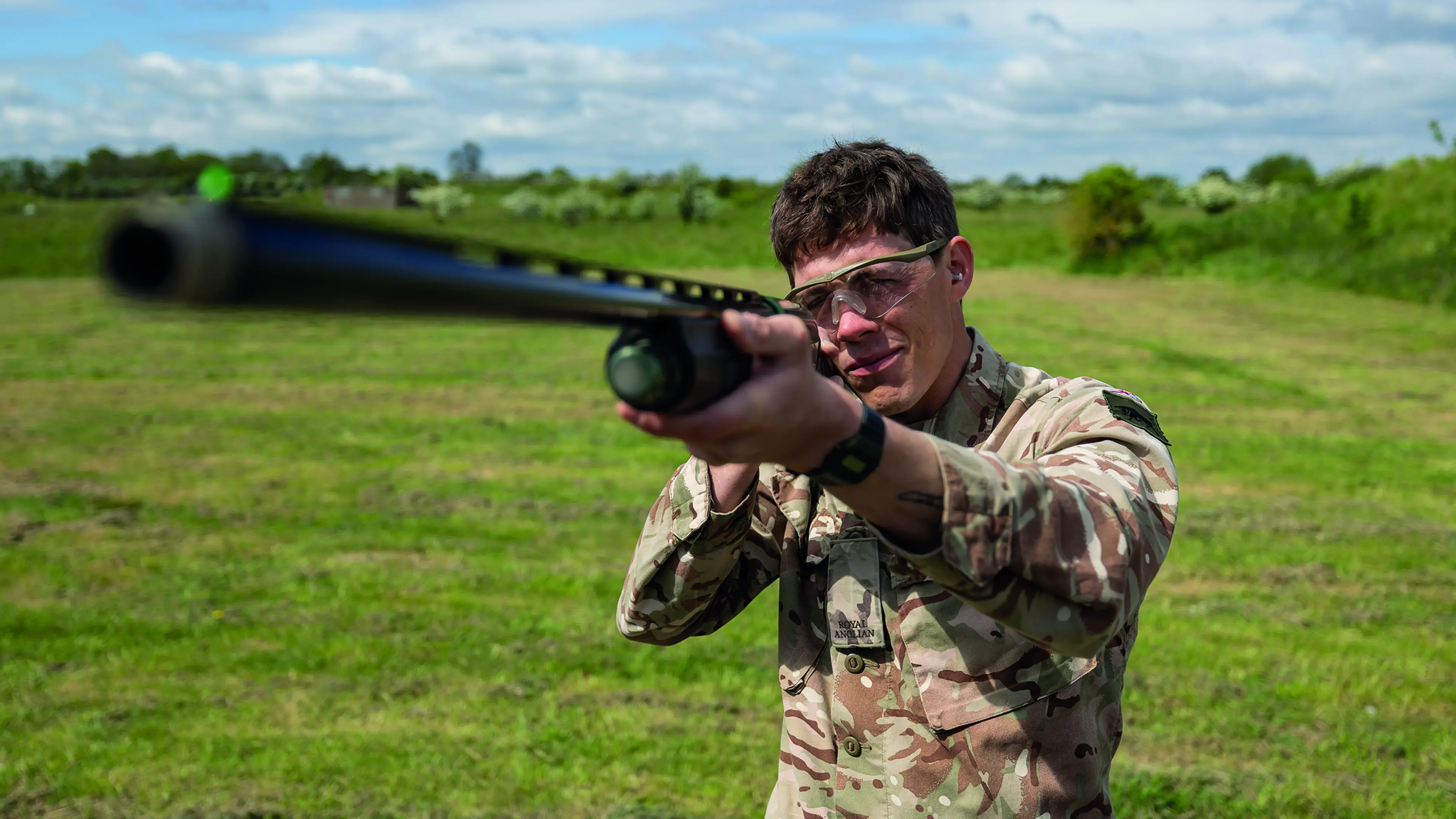
But the troops defending their homeland revealed that a humble personal weapon, the shotgun, was proving to be a potent protective asset.
Imparted by Ukrainian students attending the Operation Interflex military training courses in the UK, this front-line intel made British instructors from 1st Battalion, The Royal Anglian Regiment, sit up and take note.
Bringing the learning back to base in the Midlands, training wing bosses started thinking about giving soldiers a few shotgun skills of their own.
A clay pigeon range, where troops could blast recreationally while learning a new drone-downing trade on the side, looked a good way forward.
And it seems many other units have had the same idea.
“Realistically speaking, if you have been spotted by a drone operator then you’re only going to have a short time to do something about it – perhaps a few seconds,” Warrant Officer Class Two (WO2) Ben Page, who first came up with the idea for the range, tells Soldier.
“This is where the skills of engaging a target moving quickly in the air really come to the fore – they generally do not come naturally to many personnel.
“We first heard about the experiences of the Ukrainians, and what they were doing to deal with the threat, early on during Op Interflex,” he adds.
“With assistance from the army clay target experts, we set up a range for the Eastern European students on the training area they were assigned to – and this is where I had the idea for something similar at our base in Kendrew Barracks, Rutland.”
WO2 Page, who is currently working at the Centre for Army Leadership at Sandhurst, recalls a disused range at the Midlands camp was identified as a good site. But relevant admin had to be completed to satisfy the civvy authorities and police had to attend to ensure everything was in order.
Funds were secured to buy five shotguns and some start-up cartridges, he adds.
With the paperwork complete and the site now fully-up-and-running, troops can either turn up to shoot during Wednesday sport afternoons – and pay a small fee to buy their own ammunition – or commanders may book out the venue for more structured, formal competitions.