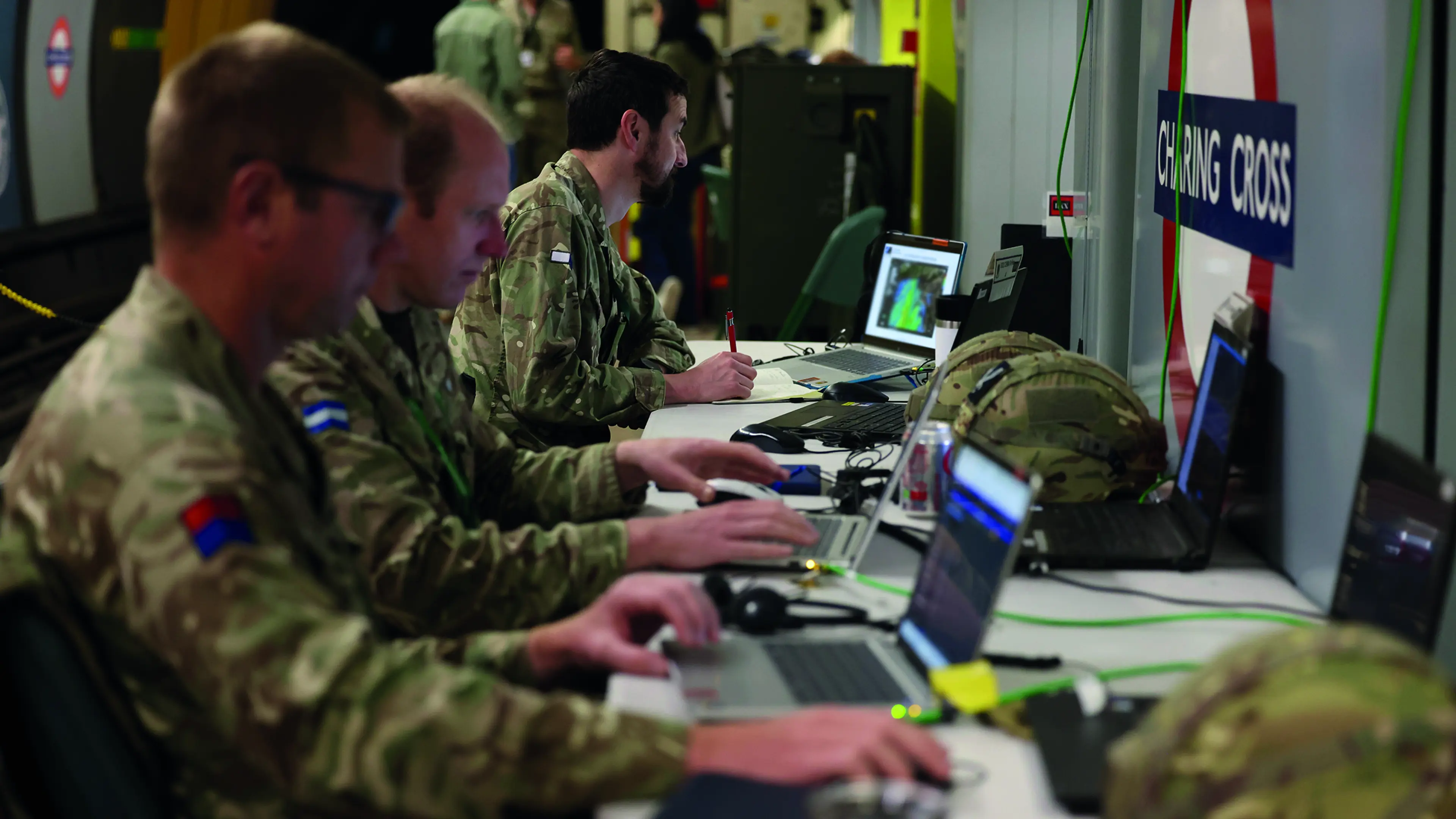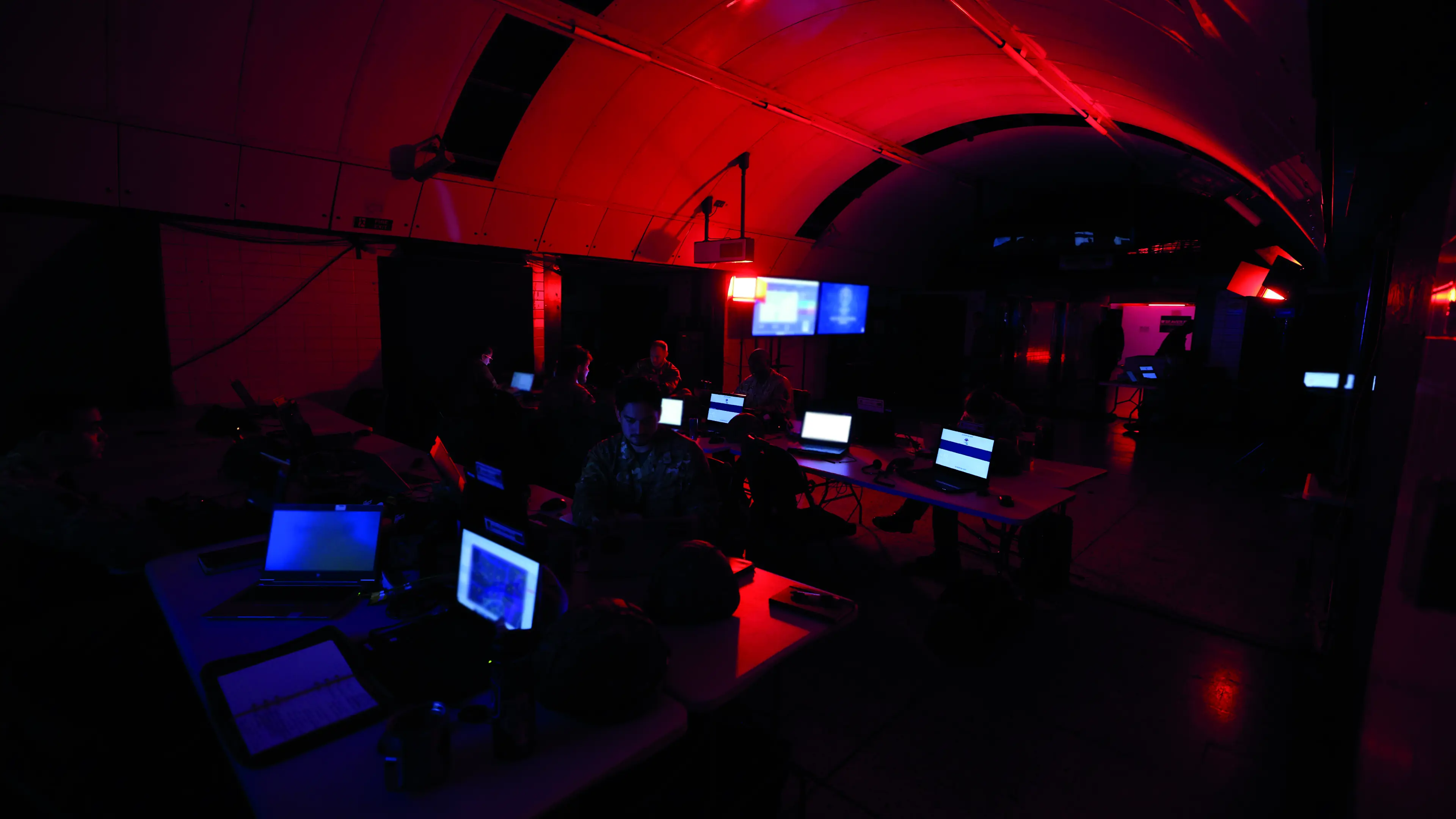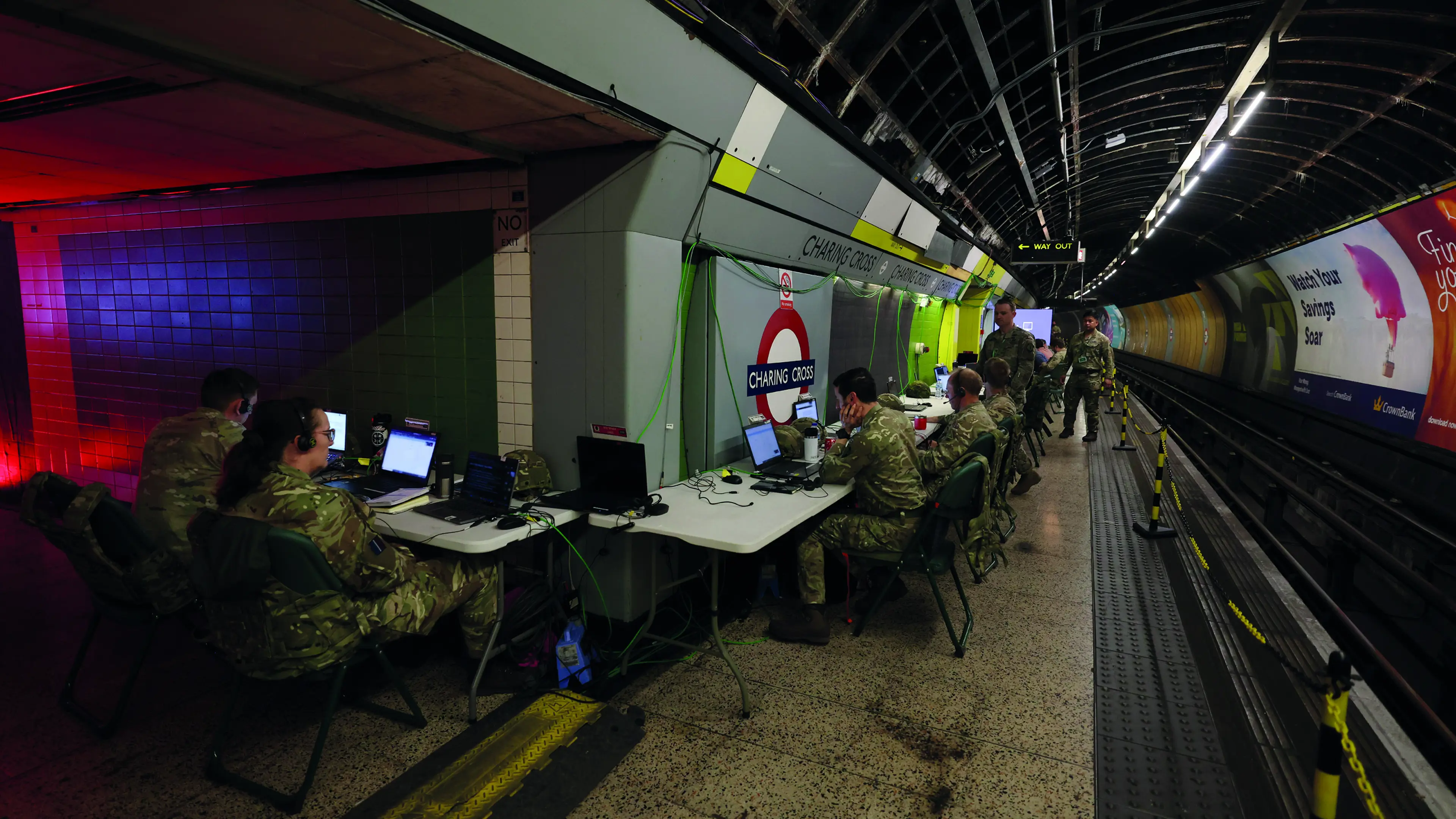
As far as headquarters go, this one has the edge. I am walking through Charing Cross Station when a fire door by one of those tube maps no one ever bothers with jumps open.
I am beckoned in by a floating hand.
What happens in the next two hours will change everything I thought I knew about how the Army fights wars, and how the next one will be led.
We descend a dusty old escalator that hasn’t been used in some time. As my feet clink down the static steps, I arrive on an abandoned platform in the bowels of the central London travel hub.
No one above us, save a couple of uninterested Transport for London barrier-operators who let us through on a nod, has the first clue what is happening down here, and the chaos being unleashed at lightning speed.
Our personal phones and laptops are confiscated at the top of the tunnel. In any case, the mind-boggling data exchanges going on down here eclipse anything I could be doing with ChatGPT on my Mac.
But as we step onto the platform, it’s strangely empty.
Where is everyone? Even for an exercise demo day, there are not nearly as many uniforms floating about as I am used to seeing in the sizeable, tented headquarters of old.
It seems, however, that this command centre for Exercise Arrcade Strike – the first run-out of Headquarters Allied Rapid Reaction Corps (ARRC) since it took control of the 1st and 3rd (UK) Divisions, and almost all Army brigades (Soldier, May 2026) – is just about as realistic as it gets in 2026.
Not only will the next war involve smaller, dispersed command posts that are less vulnerable to air and artillery attack. It will also be a game of speed, where the fastest force to make combat decisions and deploy aviation and artillery assets accordingly will be the one that survives.
Any headquarters, therefore, is likely to be subterranean, away from the prying eye of UAVs and God-knows-what else, and easy to relocate.
Thanks to Asgard, an AI-powered battlefield management and targeting system that troops access via a cloud, even in highly contested digital environments, both of those boxes are being ticked on this serial.
Just one year on from Soldier’s first article about this new technology, the team responsible are sitting alongside ARRC staff officers showing them how its decision support software – called Asgard Decide – will help them bring to bear the troops, tanks, and air assets of the Nato strategic reserve corps faster than ever.
Whether it’s the fires cell intelligence analyst using it to assimilate 1,000 images of high-value enemy targets into the 20 that matter, the multi-domain operations group synchronising precision missiles with electronic warfare, or the corps commander demanding a battle damage assessment yesterday, this system can turn days of HQ staff work into hours.
And it does so by combining all the different strands of battlefield data usually accessed on several different terminals, and getting AI to sort and analyse it.
Interoperable by design, it can also bring other countries and languages into the mix, creating a common digital environment accessible by any combination of allies.
“If it takes an enemy soldier five minutes to find and kill us, we have to do it in four,” Asgard technical adviser Ian Blair (ex-Royal Signals) tells Soldier. “If we want to win, we have to be faster; the conflict in Ukraine has shown that.
“And while we can’t make our people or our weapons move much quicker, we can transform the process.”