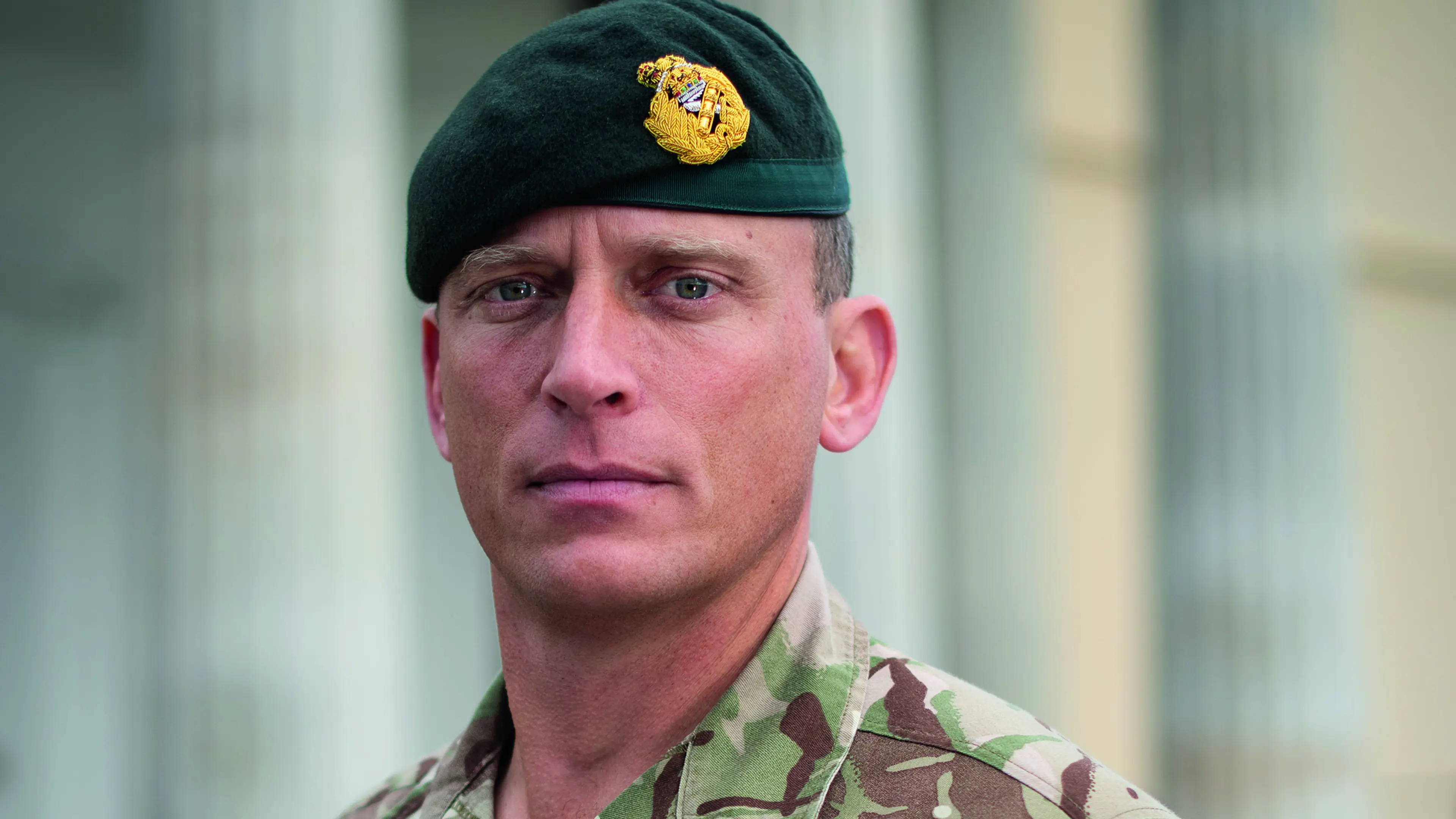
Blackout blinds and mattress toppers might not seem like obvious things to top the wish list of a newly appointed training boss, but Maj Gen Nick Cowley says better sleep is going to get more recruits through training and into the ranks.
It’s a bold claim from the top officer, who oversees the newly formed Army Individual Training Command (AITC). But he has the science to back it up, thanks to his own team of in-house human performance experts.
The importance of sleep for injury recovery and learning is a topic Soldier covered back in our March magazine. And the general says much of the data he is seeing suggests that helping troops to get a good night is one cost-free way the organisation could lower drop-out rates and therefore improve fighting power.
“Lack of sleep is making us less lethal as an army – and I have the science now to back that claim up,” Maj Gen Cowley states.
“This isn’t about being hard or soft on recruits – when you are sleep deprived you start losing bone mass. So if we want to have strong soldiers, we need to allow them to sleep.
“A really important job for AITC is to minimise wastage in training – to get the best from every person.
“How do we reduce the number who choose to leave? Even just an hour extra per night might have a big impact.”
As the army continues its efforts to double lethality by 2027, the science around maximising individual output is being closely monitored. Among AITC’s human performance specialists are civilian scientists and occupational psychologists, many of whom the general credits with “world-leading” research.
If the service wants to continue leading the globe in soldier and officer education, he says, it must also lead in this.
“It is a really exciting bit of work because we can do much of this stuff for free, bar the spend on a few blackout blinds for training establishments,” he adds.
The officer, who is commandant of the Royal Military Academy Sandhurst, says his team are also looking at pushing back breakfast times.
“Some training in sleep deprivation may be important for our soldiers, to see how it impacts decision-making, for example,” he says. “But general sleep deprivation – especially in a learning environment – cannot be defended.
“People lacking in sleep get into a doom cycle of thinking they’re not doing well enough, and many of our instructors are sleeping less than they should, too.
“By making changes, we may find troops make gains quicker and with less lesson time.”
He continues: “We don’t need to be at the athlete level of human performance; for them it’s about excelling in controlled environments. What the army needs is for everyone to perform well in inconsistent and degraded conditions.
“For most of what we need to do, if we sleep well in a dark room away from devices – and eat good, healthy meals and at times provide the right supplementation – and of course do training that is progressive, those are all the big things.
“Our PT corps is brilliant in helping us achieve this.”
Maj Gen Cowley tells Soldier of his vision for data use in initial training so that one day leaders will be able to pull up results to quickly discover why one group of recruits may be consistently outdoing the other.
“We are going in that direction,” he says, “feeding off data to analyse what changes need to be made. The opportunities are massive.”
The officer has several other priorities for his organisation – which for the first time brings all individual training of officers and soldiers together under a single command.
These include: protecting the army’s licence to operate (better safeguarding, safety and making sure the service is an inclusive and positive place), making troops brilliant at the basics – shooting, moving, being physically tough and ready to deploy – and being more technologically aware. Improving the training and selection of instructors is also a focus.
“I think we are doing the most important job in the British Army, setting the benchmark of training and our values and standards,” he adds.
“There’s the usual throwaway claim that army life isn’t as tough for recruits as it used to be, but when I see our young people pass out I am content they’re getting the training they need – they are brimming with confidence. “But we need to understand that it is never the finished product arriving at units.”
Could you instruct?
AITC wants the best corporals, sergeants, colour sergeants and staff sergeants.
“It’s a great chance to come out of your unit and build a network across the army,” Maj Gen Cowley (shown below) says.
“Working here sets you off in the next stage of your career, with lots of skills to take back.” Speak to your chain of command or RCMO.