
The cost of underestimating Eastern Europe’s killer cold has been starkly shown on past military campaigns.
In 1812, Napoleon Bonaparte’s invasion of Russia ended in catastrophe when – amid overstretched resupply routes – his troops were left without adequate kit to deal with the onset of winter.
With snow hindering the fighting power of artillery and cavalry, the final retreat saw hypothermia and climate-related injuries kill thousands of his illequipped personnel.
More than a century later – in the Second World War – Nazi leader Adolf Hitler failed to learn from these errors, pushing his logistic chain to breaking point.
Spurred by delusions of a quick victory against the Soviet Union on Op Barbarossa, a modern military force was savaged by nature.
And while the weather was not the decisive factor in either defeat, it nonetheless played a significant and – literally – killer role.
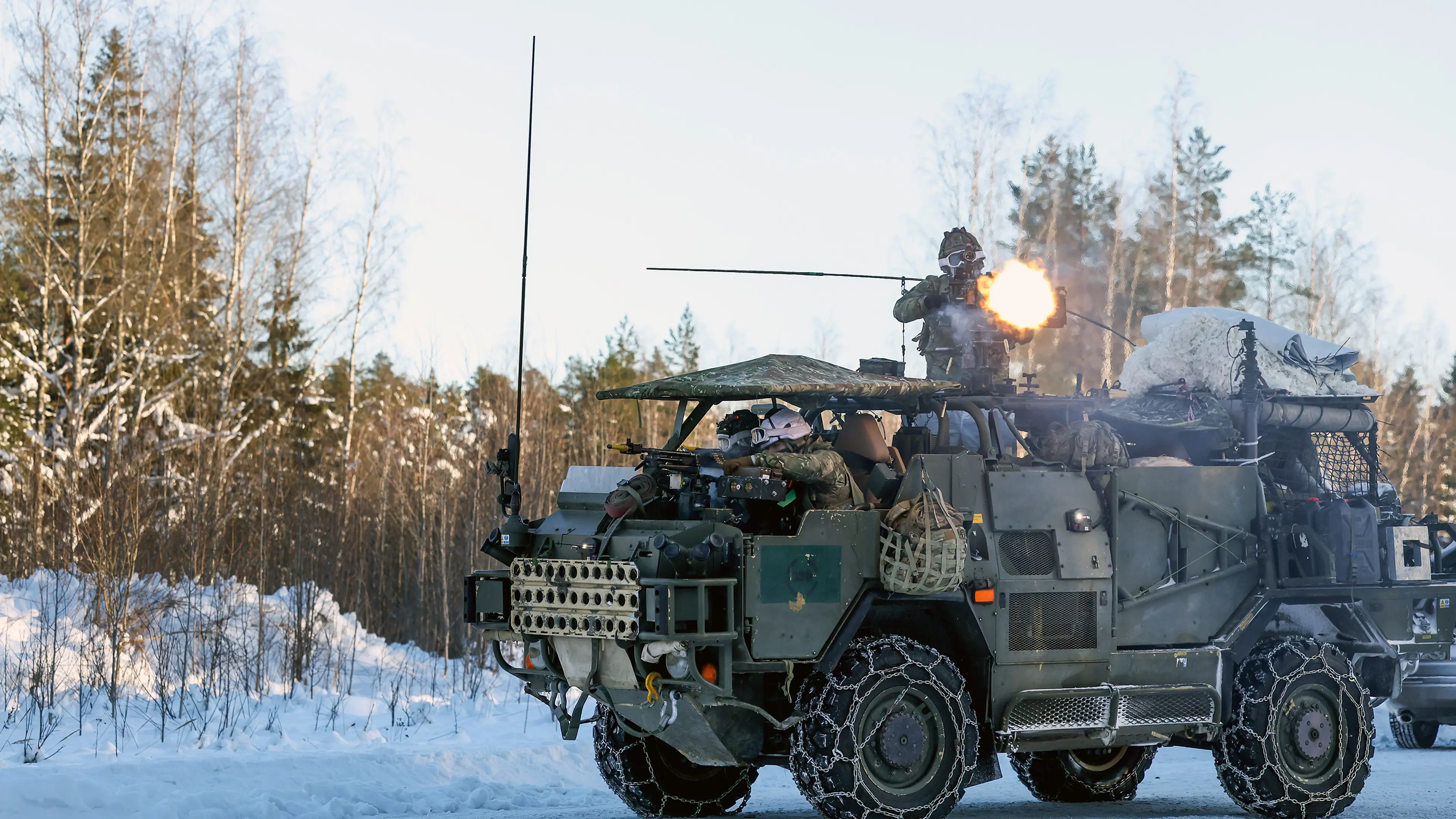
With any future European war inevitably meaning combat in the same extreme cold conditions, commanders with the Royal Tank Regiment-led Nato battlegroup on Op Cabrit in Estonia very much had the lessons of history at the forefront of their minds.
And the two-week Exercise Winter Camp was yet another opportunity to ensure the multinational force was fit to fight in this environment.
“The reports are that this is the coldest winter in Estonia for 25 years,” said Lt Col Mark Luson, RTR commanding officer and boss of the forward land forces formation, as personnel took to the frigid training area in Tapa.
The temperature out here has been around minus 25 degrees and below.” With Cabrit’s six-monthly tour rotations in place for a decade now, these manoeuvres have become a regular feature of the schedule there.
Ramping up with the cold weather operator’s course, the training cycle begins with the issuing of specialist kit, including freeze-dried based ration packs, warm clothing, boots and tents.
Classroom sessions on the realities of below-zero conditions follow in short order. Soldiers then move outdoors to perfect skills that include building shelters and butchering chicken as they progress through survival disciplines.
The phase culminates in a notorious plunge into an icy pool, after which they go through job-specific serials before tackling the combined arms Winter Camp showdown against a live opposing force. And the full-on training package this year provided a terrifyingly steep learning curve.
Facing a mock enemy that included Estonian forces, infanteers from 2nd Battalion, The Royal Anglian Regiment and US tank crews with the fearsome M1 Abrams, the Nato forces needed to dig deep to match the enemy.
But Lt Col Luson (pictured right) said opportunities opened up as a result of the freezing weather. While tanks can throw up operational issues – not least with diesel turning to jelly while refuelling at low temperatures – he said the crews functioned well.
He also pointed out that the boggy terrain of the Estonian countryside became firmer and much more armour-friendly in the winter months. “The reality is that the ground hardens and enables greater movement,” he told Soldier.
“We’ve seen that from the Russians in Ukraine, so we need to continue to practise this on our side as well – understanding that we can continue to fight through regardless of whether the temperature is 25 degrees above or 25 below.”
Having allies around with experience of the extreme climate conditions was also invaluable, the commanding officer stressed, adding that there was a particularly valuable exchange of knowledge with coldweather experts from the host nation.
“From the Estonians, we have learned everything from the very simplest things – such as how to rewarm yourself and dress appropriately with layers through to how we equip our tanks and make sure that fuel doesn’t freeze,” he added.
While the cold proved tough, the Lieutenant Crawshaw osaid soldiers had been encouraged to speak up if they had any issues.
Removing the stigma of struggling had ensured any health problems could be addressed early on and casualties kept to a minimum.
“A key theme that has come from this training is that you must have a balance between tactics and survivability in tough conditions,” he concluded.
“It has been hard, but we have learnt a lot and have a good knowledge to pass on to those coming out; soldiers have put in a great deal and gained a lot in return – the conditions of this tour have been both a high and a low.” T
his was certainly the case for Lt Jack Austin (Mercian), who added: “I have never seen so much thick snow in my life – but in terms of developing, this is going to set us up well, not just here but when we return to the UK.” Winter Camp was certainly physically and mentally draining – operating in these extremes dulls the senses and impacts on all-round performance.
A Royal Welsh-led battlegroup is arriving shortly and face the prospect of a more comfortable summer. But there is no escaping the fact that any protracted conflict in Eastern Europe will mean extremes of cold.
Like Adolf Hitler before him, Russian leader Vladimir Putin is already dealing with another winter of an illegal four-year war that he expected to be over in weeks. Clearly, it pays to learn the right lessons.
