
This month marks a milestone for the Army’s official mag.
Here is the surprising backstory to Soldier you probably never knew…

Soldier magazine’s first edition in March 1945 and it’s VE special issue later that year.
Eighty years of magazines is a big achievement when you consider Soldier wasn’t supposed to be published for more than a few months after it was launched by Field Marshal Montgomery in March 1945.
The legendary war leader wanted it to boost morale and keep troops informed as they fought the Nazis across Western Europe during the Second World War.
A publishing operation was set up, led by Col Sean Fielding—an experienced journalist who would go on to edit Tatler and the Daily Express. At first, the fortnightly title was printed in Brussels and later in Hamburg—ironically on presses that had once churned out Joseph Goebbels’ propaganda sheet, Signal.
Soldier was one of the first titles to record the horrors of the Bergen-Belsen Nazi concentration camp.
And its other early scoops included the unearthing of Hitler’s invasion plan for the UK and the mission by British engineers to build submarine oil pipelines under the English Channel to support Operation Overlord—the Normandy invasion.
The magazine was expected to cease publishing after the Allied victory, but with Germany on the front line of a Cold War with the Soviet Union, it survived to become the in-house magazine of the entire British Army.
Later, it would publish iconic images of the Falklands War and unique coverage of conflicts in Iraq and Afghanistan.
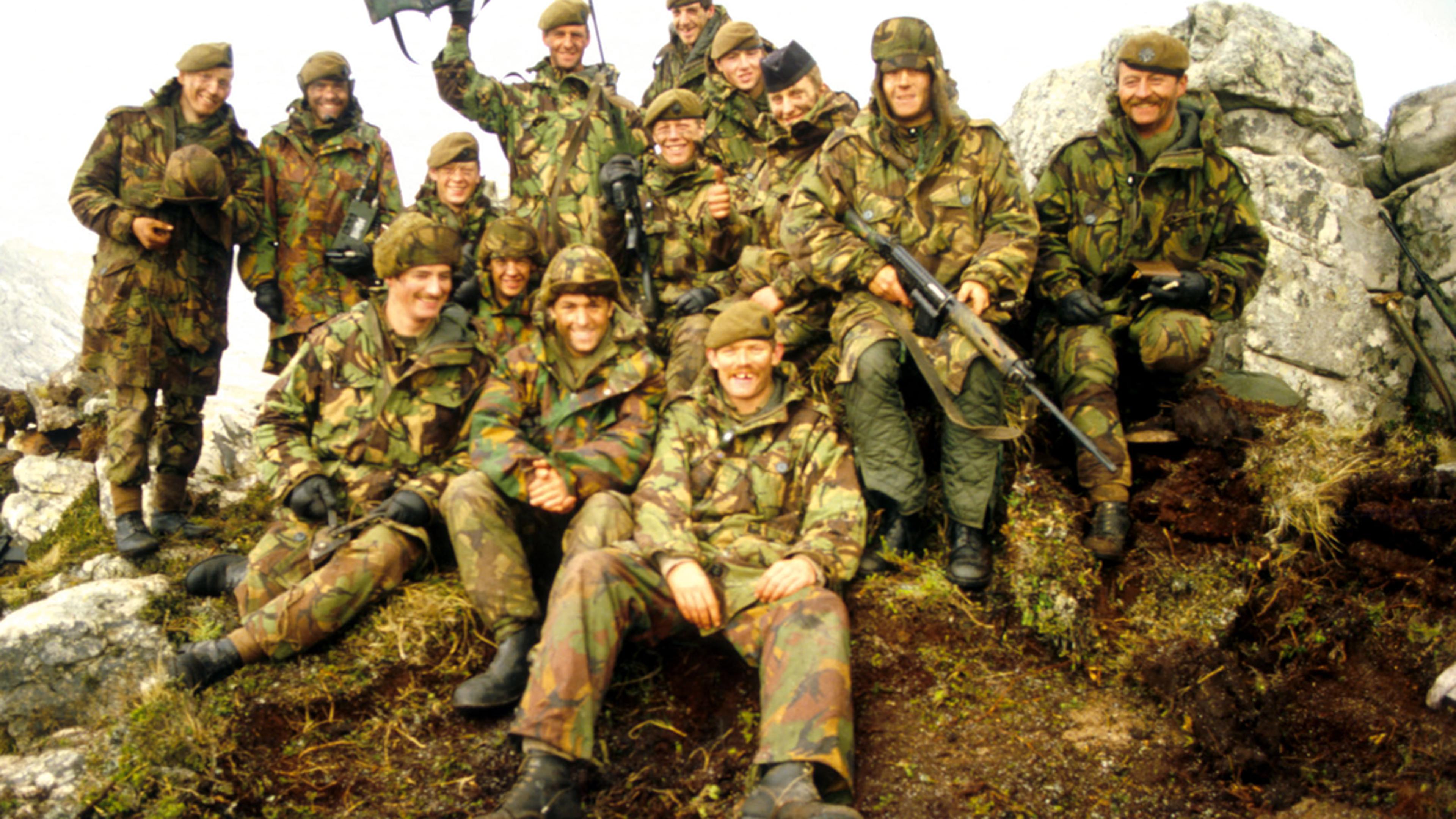
Soldier photographers captured some iconic imagery of the Falklands War in 1982.
During the 1950s, with the British Empire in decline, troops were deployed to flashpoints including Aden, Malaya and Cyprus, and a good proportion of readers were National Servicemen, with conscription still a reality into the 1960s.
In fact, since 1945, the story of the British Army has been one of continuous operations, with a small in-house team working hard to ensure personnel were kept informed of them.
Soldier writers and photographers have recorded the bravery and everyday struggles of troops in every major conflict the Service has been involved in since the final throes of the Second World War.
They include Korea in the 1950s, Malaya in the 1960s, Northern Ireland in the 1970s, Iraq, Afghanistan and, more recently, how personnel are supporting Ukraine in its war against Russia.
In these theatres, the magazine’s staff talked to troops, recording life in often austere conditions, during ferocious contacts and the struggle to keep the peace.
The stories conveyed the highs and lows, the tension and the offbeat.
Soldier gave an insight into how life in theatre looked and felt as well as the huge demands placed on personnel and their families. It also reflected the sacrifice of so many, with tributes and memorials.
Away from operations, the daily grind of soldiering brings its own issues to work and family life and over the years Soldier has covered many personal gripes.
These are reflected in our letters pages—covering topics from food to kit to medals and housing and often escalating them straight to the top.
This boosts morale and gives commanders a sobering ground view from the ranks. And these published letters have even helped change policy.
Over 80 years, the magazine’s content has been a barometer of Army life, reflecting evolving tastes, values and concerns.
Female film stars once featured on the back cover, and Pen Pals was a popular forum for troops to find romance in an era before the internet arrived.
The Army has seen many changes more recently: women now serve in ground close combat roles, and diversity has become a key theme. The ban on LGBT personnel was lifted in 2000, and when the Army's first openly gay soldier featured on the front cover, it hit the headlines in the UK media.

An exclusive report from Kosovo in Soldier magazine’s July 2000 edition.
The publication has changed significantly under the leadership of different editors, photojournalists and writers through the years. It eventually morphed into a glossy, consumer-style A4 magazine and is now printed on cutting-edge presses by Walstead, in Cornwall.
The title remains an essential piece of kit in 2025, communicating for an Army facing new challenges in a changing world.
A small group of civil servants who are trained journalists uphold its finest traditions today. And articles, letters and news stories talking openly about the very best—and worst—aspects of military life still dominate the pages.
Most importantly, this trusted title continues to keep soldiers informed, educated and entertained in the same manner that Monty intended.
With a new online Soldier magazine archive, social media feeds and an overhauled digital edition launched to make the mag phone and tablet-friendly, it is hoped our mission to bolster the moral component of fighting power—by giving a voice to British soldiers—will continue for many years to come.
