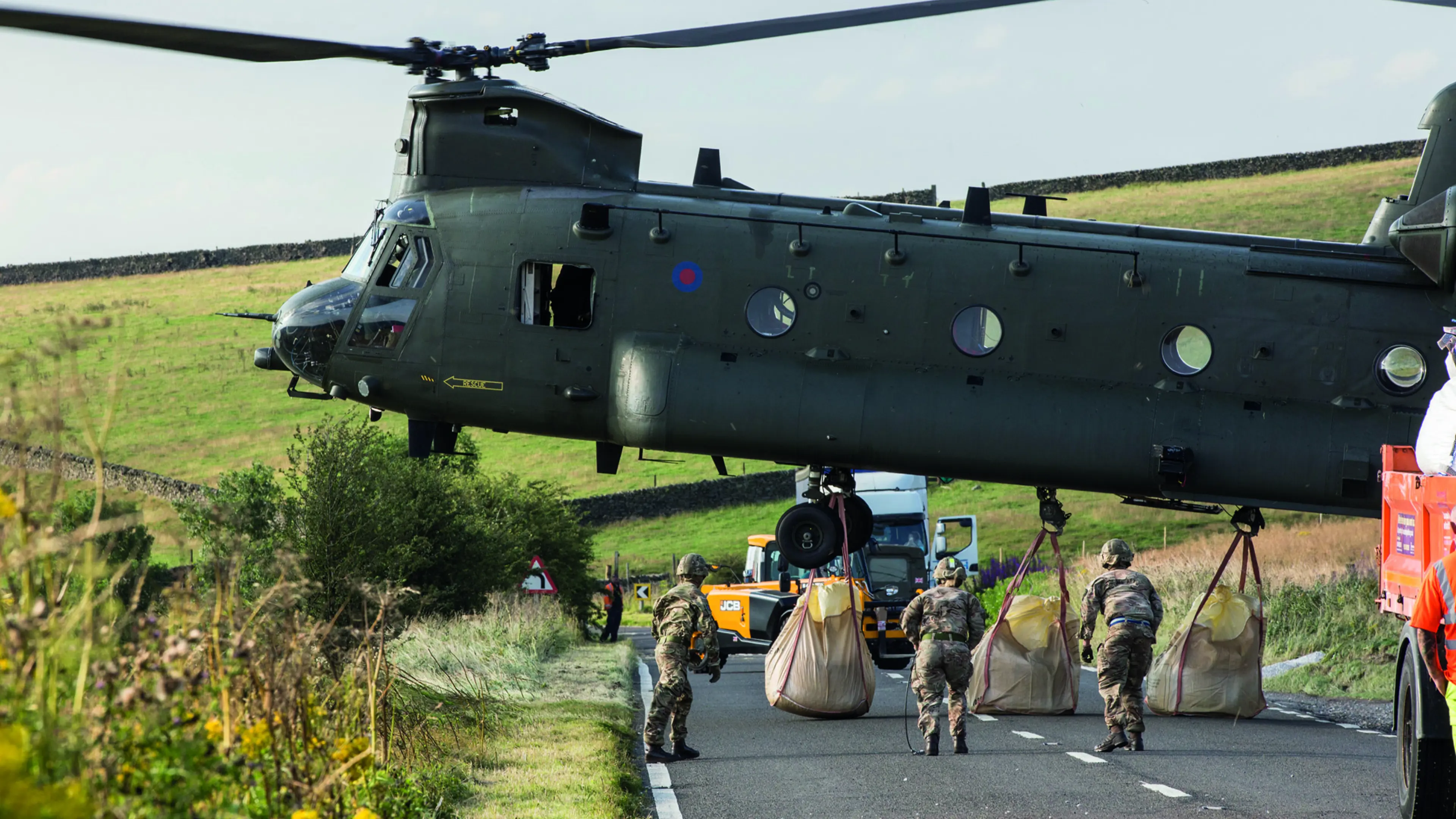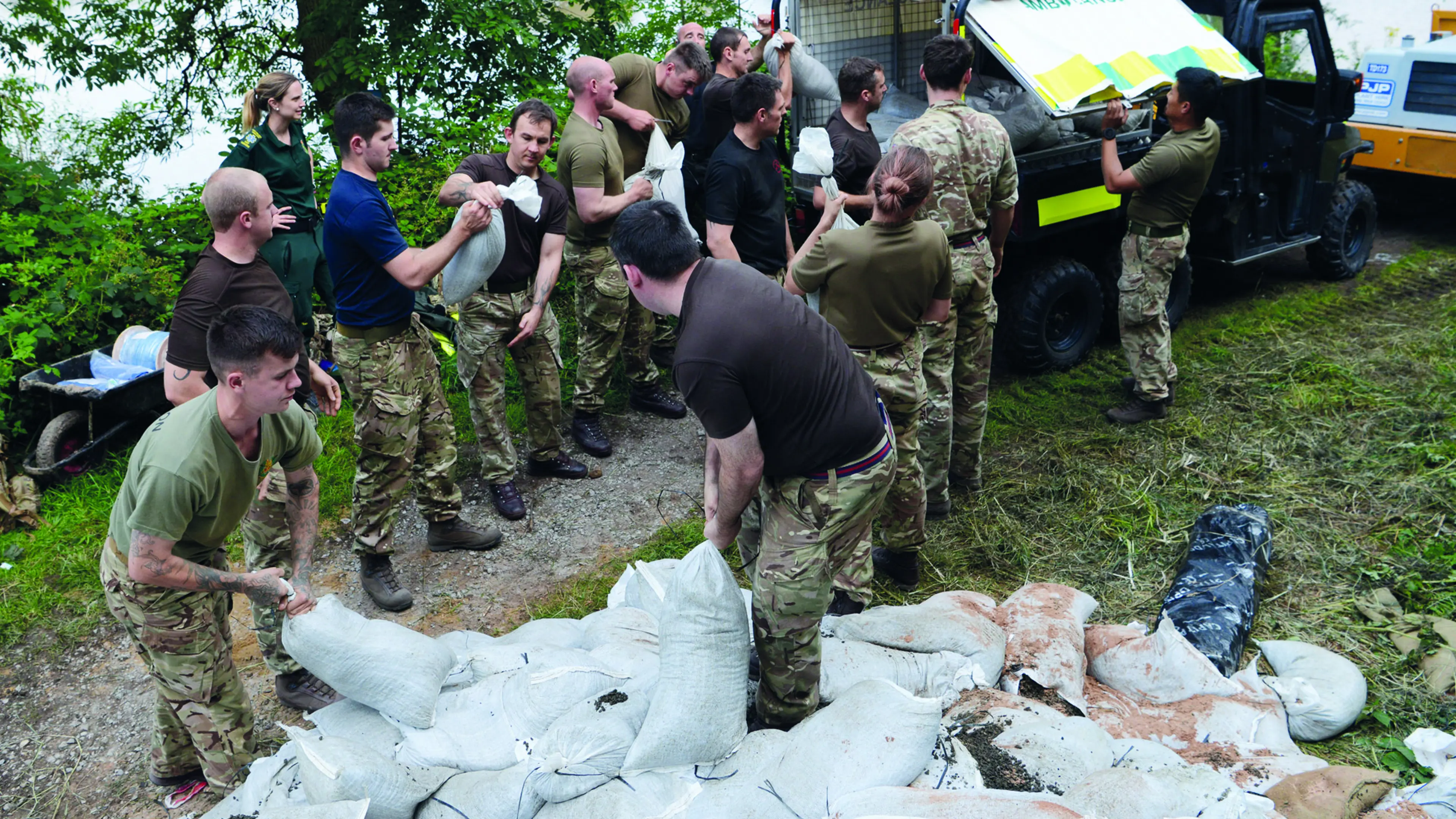
When a dam at the Toddbrook reservoir began to disintegrate and collapse during an unprecedented deluge seven years ago, a regional catastrophe loomed.
Amid a structural failure and building water pressure, 1,500 residents from the Derbyshire community of Whaley Bridge were evacuated from their homes.
It was then that the British Army, on the scene assisting the civilian authorities – turned to a pool of reservist experts, the Engineer and Logistic Staff Corps, for help.
“We knew a construction exec with knowledge in the dam field,” Colonel Gary Sullivan, the outfit’s then commander who took the phone call, recalls.
“He was in a board meeting, handed over to his deputy and got into his car.
“The corps also called one of its other members, a geologist – he worked through calculations to find the best aggregate to support the structure, then worked with Royal Air Force Chinook helicopter crews to actually drop it.”
Calmly, and along with a group of regular sappers and other professionals on site, the expert duo helped to keep the dam in one piece, diverting the torrent of water. Then they had a bacon butty, put their suits back on and returned to work.
It was one incident in an impressive back catalogue for this tiny outfit, which is now known simply as the Staff Corps and is arguably one of the British Army’s best kept secrets.
Made up of civvy captains of industry with a formidable array of expertise between them, it is a top-level example of the skills that reservists bring fromtheir day jobs.
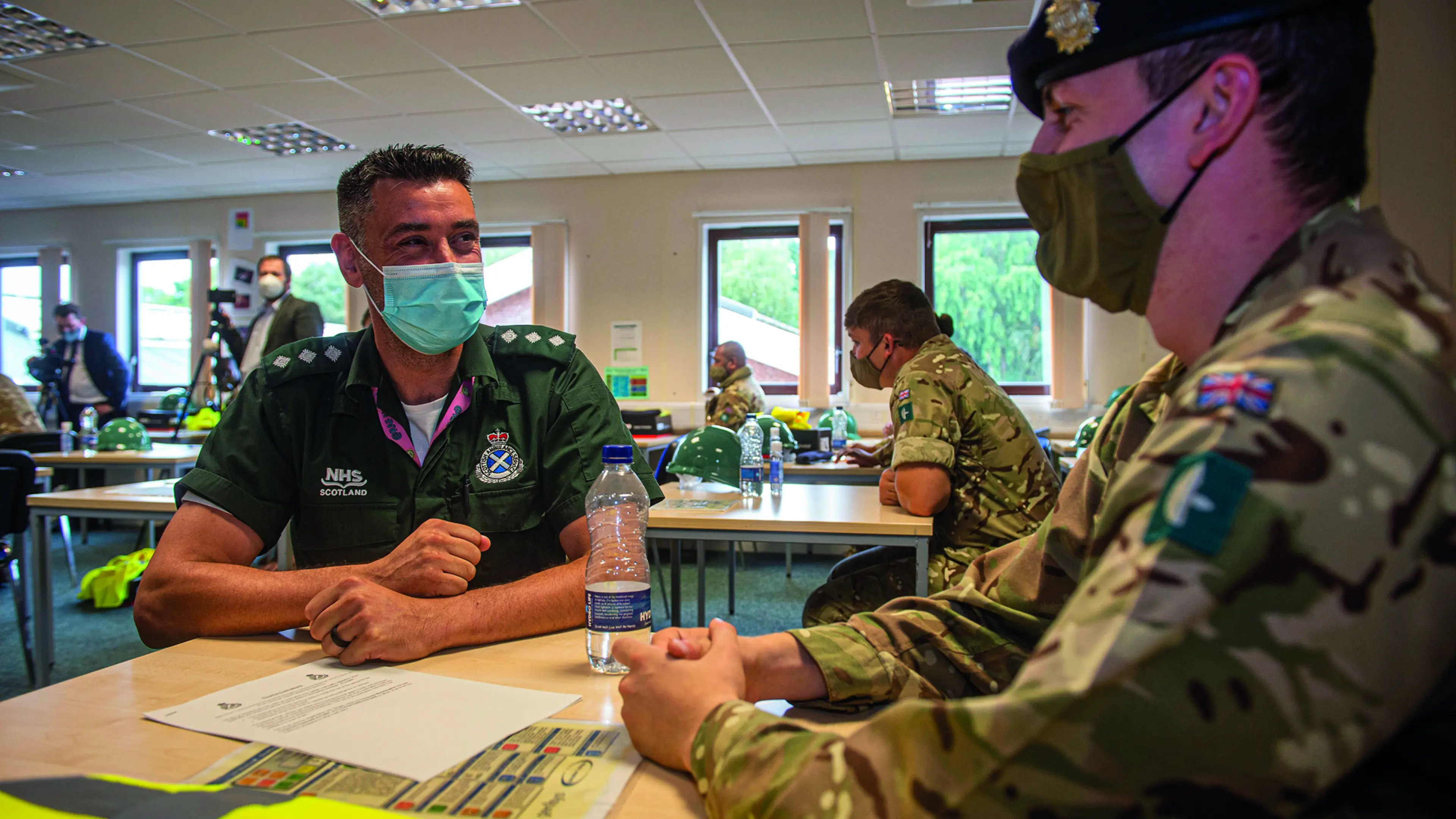
Plugging the military into a LinkedIn like range of professional networks, from healthcare to construction and transport, their more recent work has included UK projects such as the setting up of the Nightingale hospitals during the Covid crisis, plus taskings in the Caribbean, Middle East and former Yugoslavia.
“There are only around 100 of us in all, and I suppose you could say we live in the shade rather than the shadows,” says Colonel Sullivan, who has charted the history and human story of the outfit in a new book called To Serve the Future Hour.
“Unless there is a clear imperative, we would rather avoid the spotlight.
“You cannot volunteer for the corps either – you have to be invited to join, so if you are wanted your call comes with an old-fashioned tap on the shoulder.”
The history of the organisation is certainly a remarkable tale.
Formed during the Crimean War in the 1860s – when a belligerent Russia was fighting the Brits and their allies in what is now modern-day Ukraine – the corps began life as a means of tapping into the specialist knowledge of railway professionals.