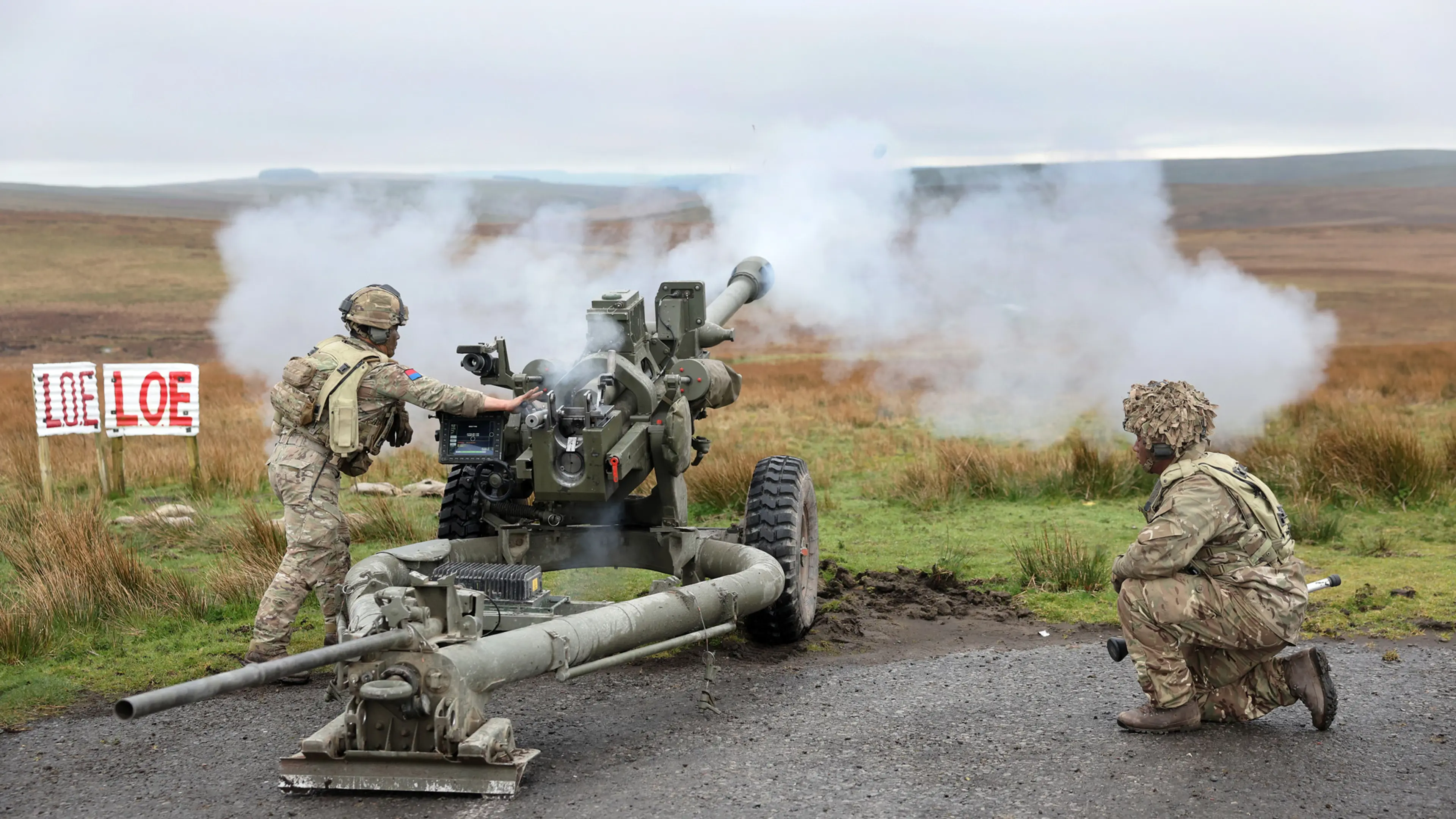
The cloud hangs low over the South Wales hills as the crump of an L118 light gun reverberates through the damp air, sending a nearby flock of sheep scattering in panic.
Some eight seconds pass before a puff of black earth on the ridge ahead marks the impact of the 105mm munition – a dull thump following moments later as the soundwave catches up.
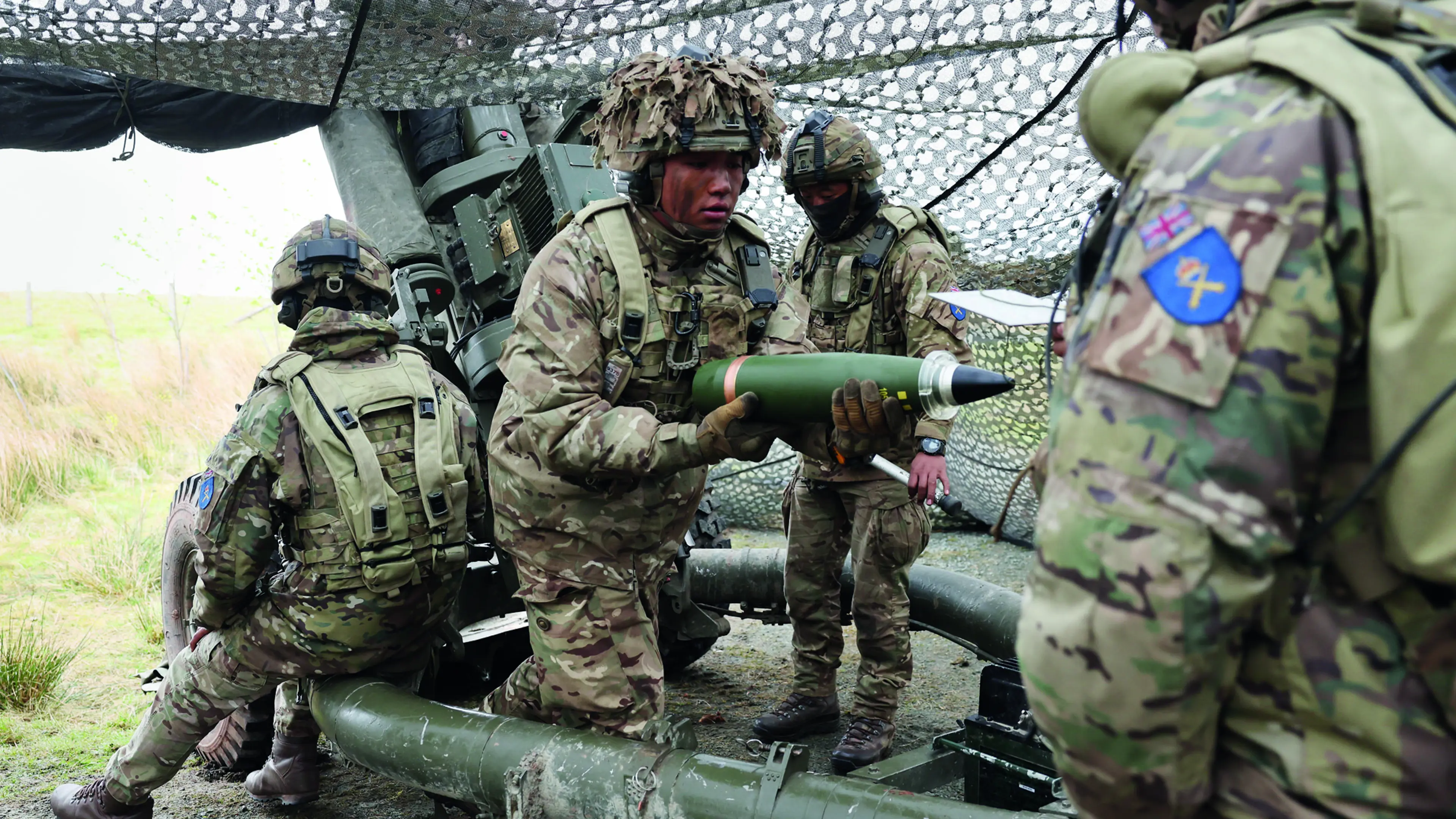
Shouted instructions ring out while the crew ready themselves to fire again, unleashing a total of eight rounds onto the enemy’s position in quick succession.
Then, having hurriedly hooked the weapon up to a waiting Pinzgauer, the troops bug out, lest they become targets in turn, and peace descends on the scene once more. Safely away, detachment commander Sgt Umesh Limbu (pictured below) pauses to recap the drill for Soldier’s benefit – and while the casual observer would have noticed nothing amiss, it appears things didn’t go entirely to plan.
“We were using the gun in a sniping role, where we fire from a covert location given to us by the fire support team,” the 34-year-old NCO explains. “The FST observed the enemy, gave me their position, the bearing and the distance and I briefed the boys. “The first shot was on target but because we were on hardstanding, the gun moved a lot and the second round was way off. “So we reduced the range until we hit the target again.
This was my second time doing direct fire – the first time was on soft ground, where the plate beds-in more to control the recoil – so it was quite difficult to do the corrections. “But it’s part of learning and the lesson for next time is to choose softer ground if possible.”
It might be a fairly routine day on Sennybridge Training Area, however the troops involved are making history because ten months ago they signed up to become the first members of the brand-new King’s Gurkha Artillery (KGA).
Created to bolster the army’s close support gunnery capability amid the drive to increase fighting power – as well as to ease workforce shortages – the move will see some 400 Nepalese personnel welcomed into the fold by 2030. And Sgt Limbu and his colleagues are at the vanguard of the effort, having undergone an accelerated training pipeline designed to rapidly upskill them in a completely new trade.