It's not every day soldiers get to hone their skills on a genuine battlefield – with those who fought there decades earlier on hand to share their experiences.
But it was an opportunity that members of 4th Battalion, The Parachute Regiment (4 PARA) seized with both hands as they merged modern training with military history during their recent stint as the Falkland Islands Roulement Infantry Company (RIC).
Keen to step things up a notch while conducting Exercise Cape Upholder – a routine fixture of the three month tour – unit bosses arranged for veterans of the 1982 war in the South Atlantic to brief troops on their memories of the campaign at key locations.
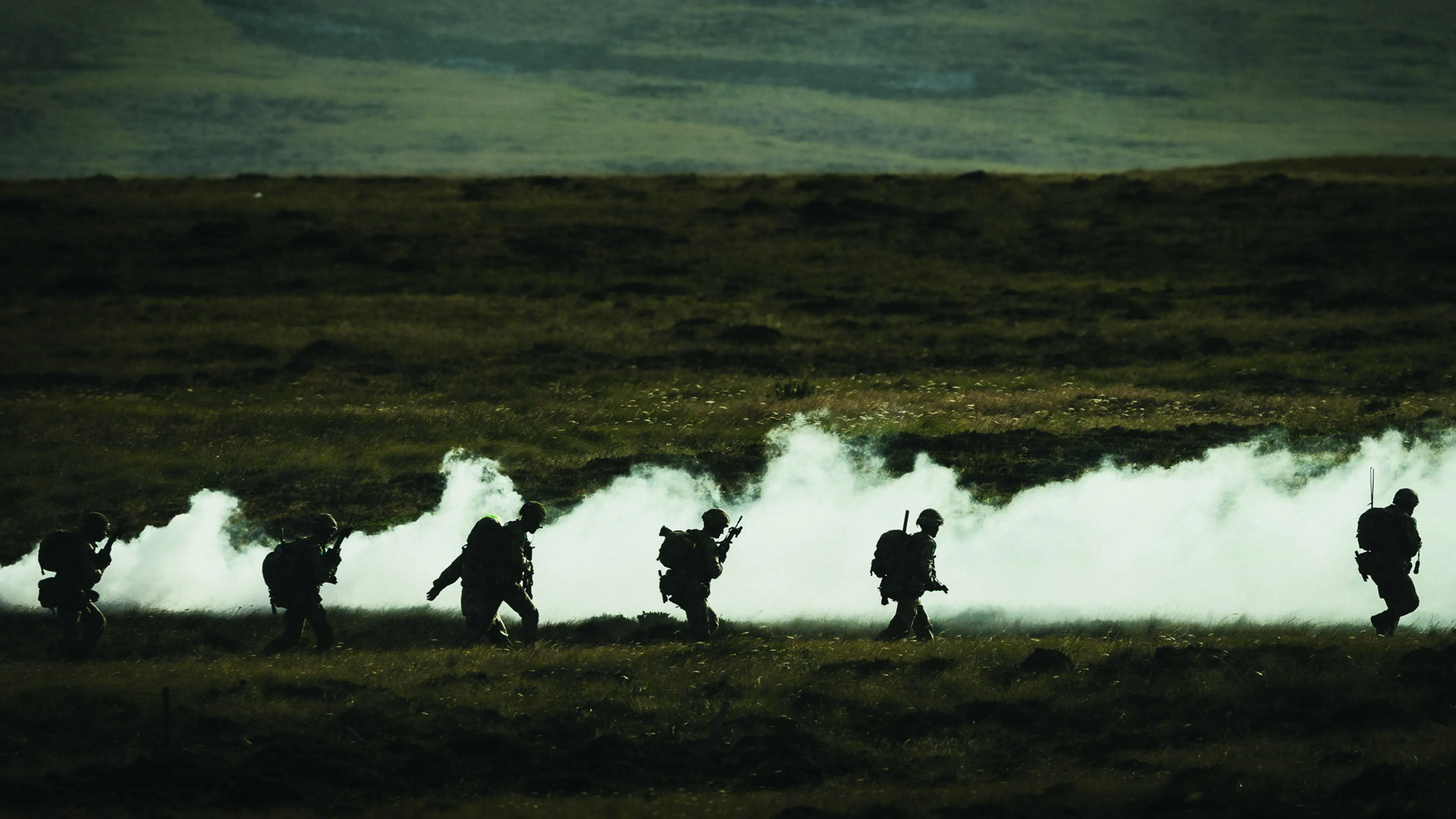
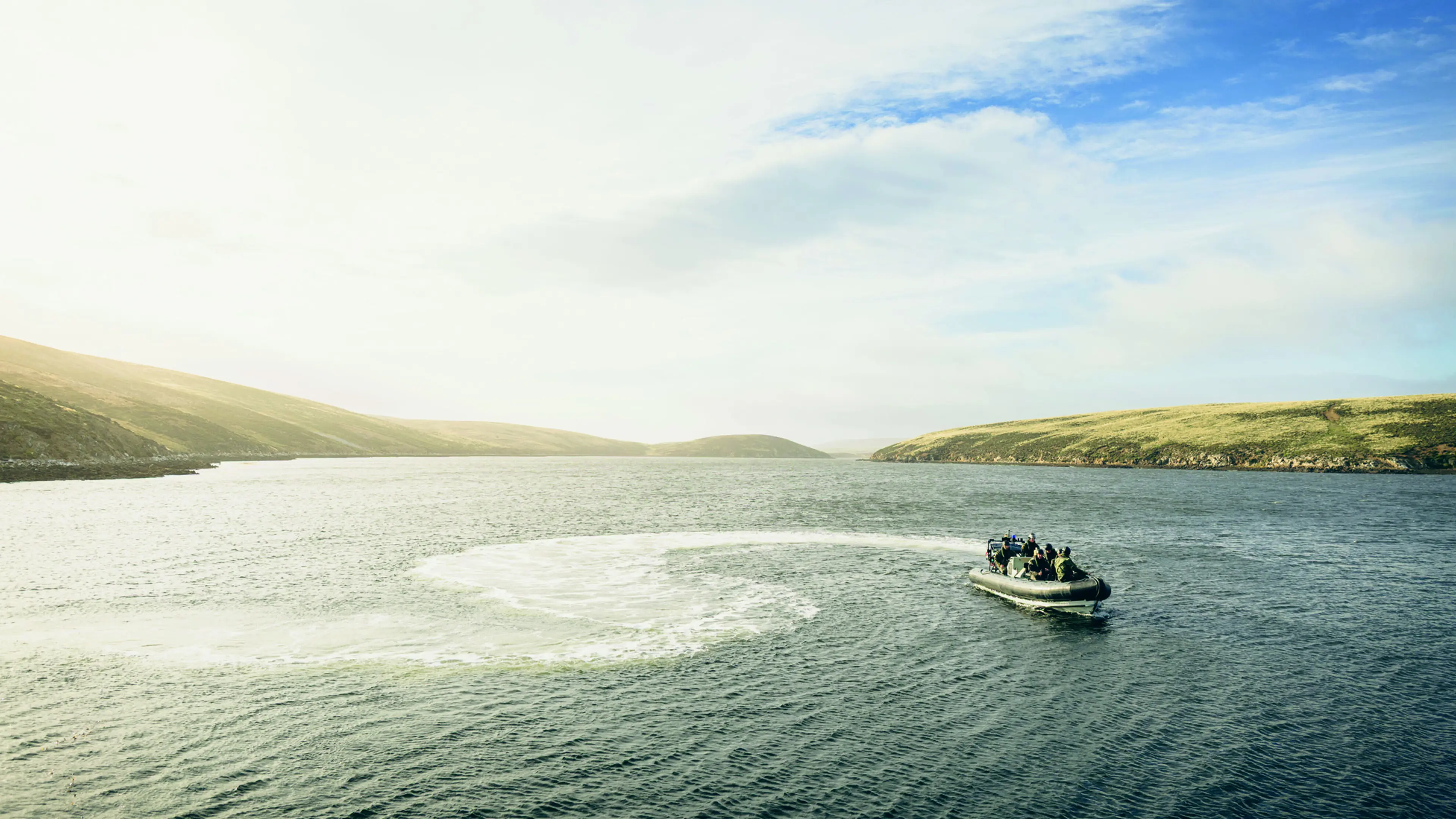
And in a further dose of realism, the part-time personnel inserted by helicopter and boat, before retracing the route their forebears famously tabbed, from Port San Carlos to Mount Longdon and Wireless Ridge then on to Stanley, after which a company-level live-fire package brought proceedings to a close.
Lieutenant Peter Fadian said the outing had been a once-in-a-lifetime chance for troops to “soak up” their regimental history.
“It filled us with a lot of respect for what they did back then, with basically no notice,” he went on.
“You really appreciate the ground, the distance and the weight they carried – and the requirement to be fit. That’s what the veterans said to us – fitness is what gets you through mammoth tasks like that.
“It’s one thing reading about it in books, but walking the ground and having the people actually there sharing their experience – it makes everything you’re taught about tactics come to life.”
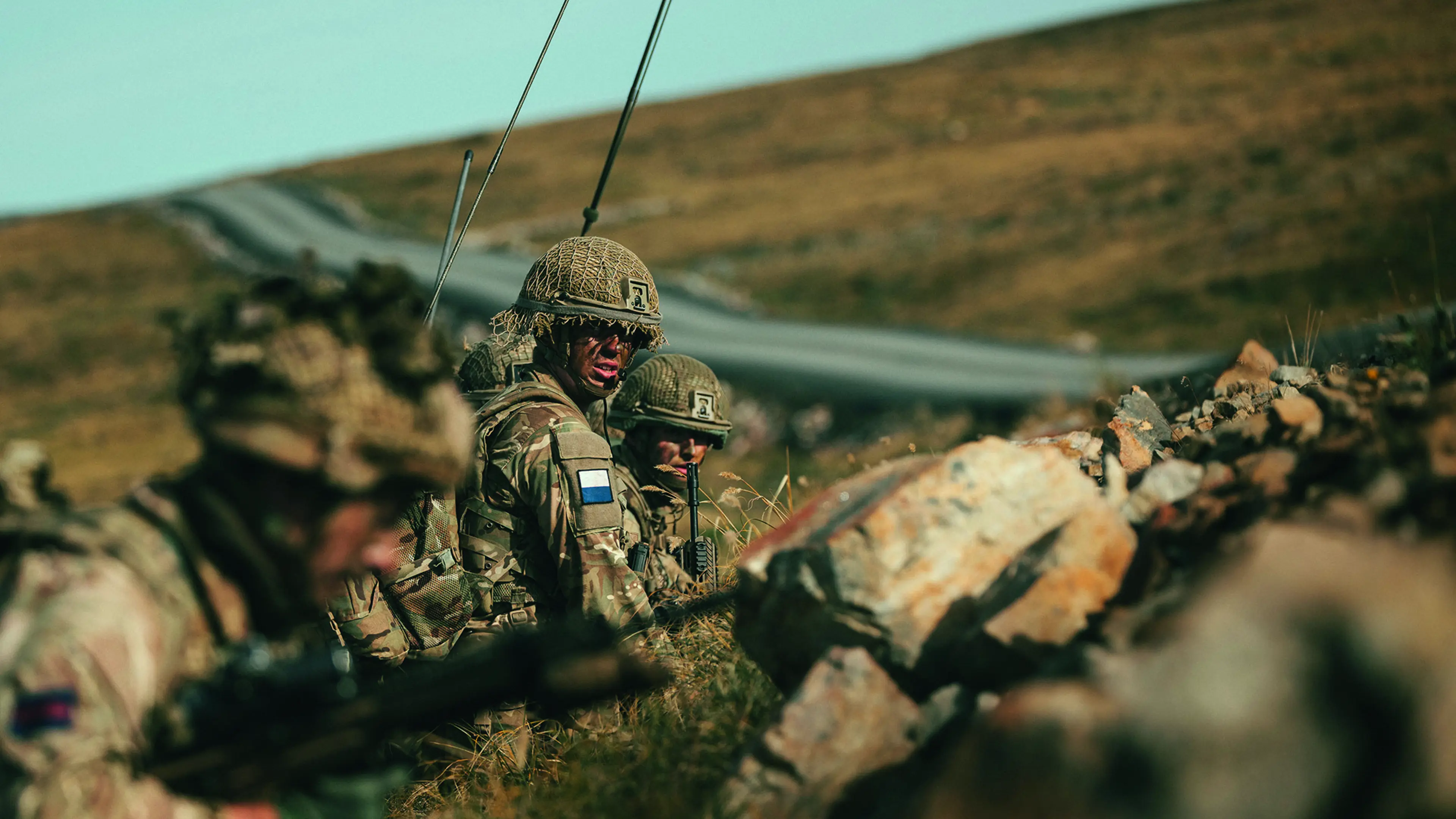
After covering around 80 miles across East Falkland, troops staged an attack on a mock enemy position on Onion Range – incorporating support weapons such as mortars and the heavy machine gun and teaming up with colleagues from the Falkland Islands Defence Force.
With members of 4 PARA held at five days’ notice to move under the Very High Readiness Reserve, the serial saw some 90 troops signed off for potential rapid deployment.
Private Ben Buxton, a London policeman in his day job, said the company-level live drills had been a highlight of the package.
“I’d love to do live attacks every week but it’s not possible,” he added. “People definitely concentrate a bit more on the marksmanship principles as opposed to with blanks, because you can actually see the effect of the rounds.
“I was on the sharpshooter, which is an excellent bit of kit, so I needed to be in a good position to hit the target as well as using suppressing fire.
“You feel a bit more switched on and it brings out the best skills for the job you’re training for.”
For 4 PARA, the assignment – which wrapped up shortly before this issue went to press – marked a return to the Falklands after an absence of ten years, having last mobilised as the RIC in 2016.
Among those to make the journey last time around was Dan Conn– then a Private, now a Corporal (Cpl) – who said that while the routine requirements of the tasking hadn’t changed much, this visit had offered the chance to venture to Ascension Island and South Georgia.
“In Ascension we patrolled to various points of the island to collect intelligence, spoke to the American contractors who worked there and helped their conservation team with a few little jobs,” explained the 29-year-old.
“All of the beaches are covered with turtle nests and we went and saw them at night with our thermal sights, which was really interesting.
“I think people in the UK have the perception that no one lives in the Falklands and all you do as the RIC is stag on, but that’s not the case at all.
“There’s a lot to see with different wildlife and the battlefields.
And even doing the quick reaction force gives you an insight into how an ops room runs on tour.”
Reflecting on the evolution of military training in the past decade, Cpl Conn said the package had kept pace with the rapidly evolving pace of warfare, but in many respects remained timeless.
“In terms of what has changed, we now have a UAS detachment, with reconnaissance and first-person view drones,” he continued.
“Other than that, we are still doing platoon attacks and live firing because as infanteers, we’re still practising those core skills that a soldier in 1982 would recognise.”
Now back on home soil – and standing by to defend UK interests in an increasingly volatile global context – 4 Para have sharpened their edge, while continuing the legacy of those who answered the call 40-plus years ago.
For this generation of paratroopers, their time down south served as a reminder that the responsibility to be ‘ready for anything’ rests firmly with them.