
From a distance, the expanse of rock looks devoid of life – a bleak granite cliff where few would surely venture.
But on closer inspection, ant-like forms can be seen gathered on a ledge, some 150m above the shoreline of a teal lake.
After a few minutes’ pause, one of the figures swings out across the face, grasping for the next handhold before hauling themselves upright, while the whoops of their companions drift faintly down the valley.
The precarious-looking manoeuvre is enough to induce second-hand vertigo in those watching from below, but when Soldier finds the troops safe and descending through the pine forest a short while later, their excitement is palpable.
“It’s sick,” says Tpr Nikole Phillips (RL), still buzzing from the climb.
“You had to swing across the gap and catch onto the rung with your left hand.
“I just blanked it out and ran, swung out, kicked the wall and grabbed hold of it. It was pretty scary, but fun.”
The 19-year-old and her colleagues have just completed their third day of Klettersteig – a German term for via ferrata, a method of climbing involving cables and ladders embedded in the rock.
While not considered technically difficult, it exposes participants to high altitudes with less risk, as well as developing trust in kit and equipment. And in keeping with the core objectives of army adventurous training, Tpr Phillips (pictured left) says the activity very much tested her limits.
“There are three zones – comfort, stretch and panic,” she explains. “This was definitely stretch. It 100 per cent develops your confidence.
“There are times back at camp, like when you’re on CO’s PT and in your head you’re saying ‘this is a lick – I can’t do it’.
“But now I can think back to this and remember how I was scared, hanging off a wall, but did it. So I can absolutely do PT.”
For fellow Royal Lancer Tpr Riley Wilkinson, even signing up for the Austrian outing – known as Exercise Balaclava Berg – had been a major step forward. Despite having previously taking up opportunities to try skiing and mountain biking, the 24-year-old admits his fear of heights gave him pause.
“It’s not normally my cup of tea but I just felt like I should challenge myself because I like learning new skills and improving myself,” he says.
“I don’t struggle with normal phys but this is a different level of fitness. If I could calm myself down I’d be way less fatigued, but I get off the mountain and my arms, back and neck are hurting because I’m holding on so tight.
“You shake from the adrenalin so I try and breathe and do positive self-talk. I’m quite proud of myself for even giving it a go and making it this far.”
As Troopers Phillips and Wilkinson head off with their group to spend the night in an alpine hut ahead of tomorrow’s climb, elsewhere in the mountain range a further 20 or so other personnel from across the Royal Armoured Corps are reflecting on the day’s exertions.
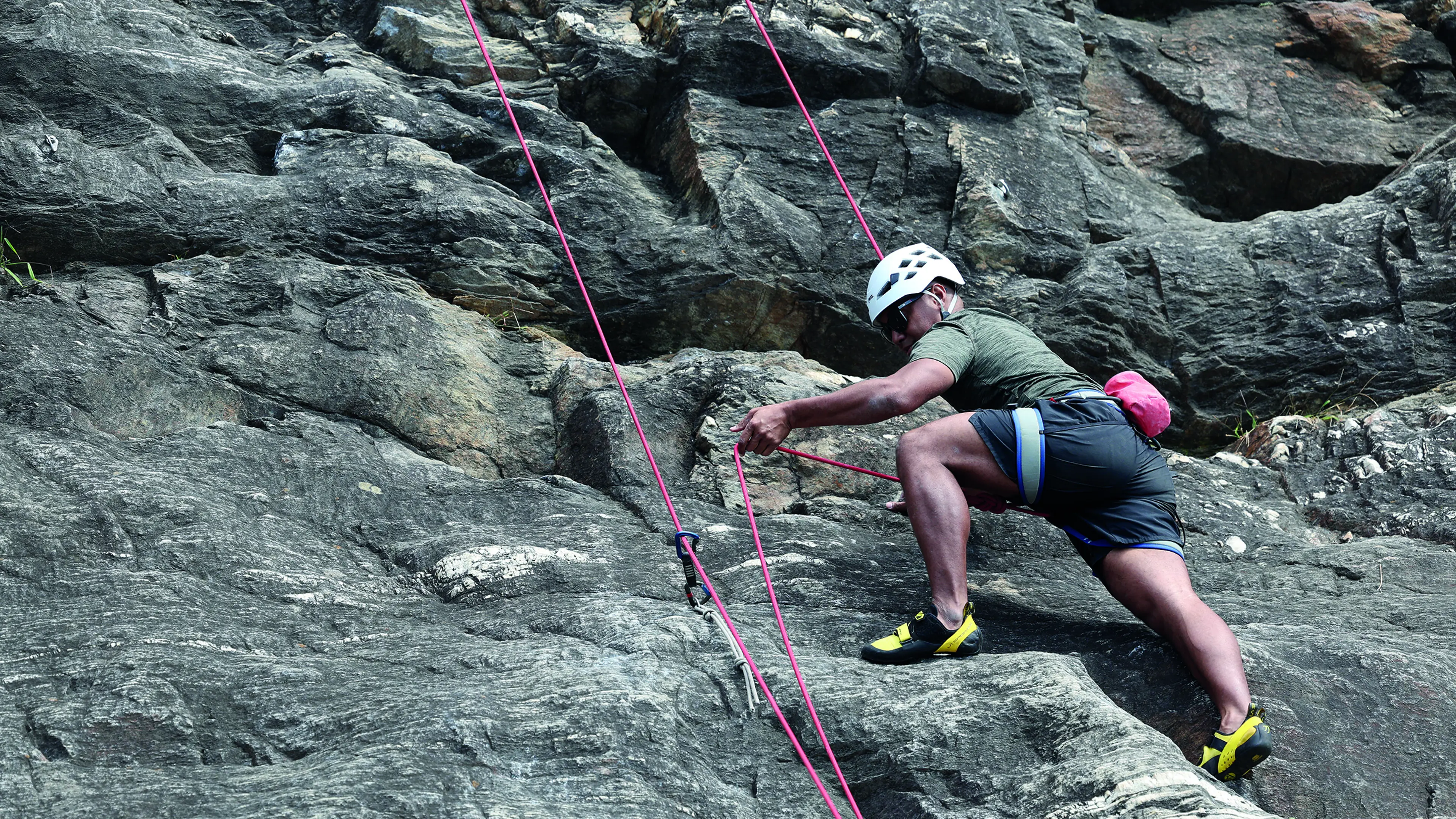
In addition to Klettersteig, those taking part in the two-week exped are working towards foundation qualifications in single-pitch rock climbing, plus summer and alpine mountaineering – with the latter taking place on the Pasterze glacier.
Located at the foot of the Grossglockner, Austria’s highest peak at 3,798m, the ice field presents a hostile and challenging environment for any climber. But thanks to support from the country’s military, the Brits have been able to safely explore the forbidding terrain.
The Bundesheer’s 7th Jaegerbrigade – experts in high altitude ops whose motto is ‘comradeship, toughness and commitment in the mountains’ – have provided top level guides for the package.
And as Lt Ben Hunt has experienced first hand, their knowledge is nothing short of crucial.
“There’s not much to reference other than ice and snow and you have to keep your wits about you at all times because there are crevasses,” he says.
“If you take a wrong step you can fall straight through. I went through to my knees at one point and another person went through up to his chest, with his daysack perched on the snow.
“You’re roped up to each other, obviously, and the rest of the team use their bodyweight to slowly pull you back up.
“If you weren’t tied together you wouldn’t be coming out.
“These crevasses just go on for hundreds of metres below the glacier – all you can see is darkness.
“The key principle is knowing the ground and never being alone.
“It’s the most technical climbing I’ve done. We were using ice axes and crampons to climb the sides of the glacier. It was so cold, but after about ten metres you’d be knackered and dripping.”
As principal organiser of the exped, however, Lt Hunt’s hard work started some 13 months before he even set foot on the ice.
In a time of tough financial scrutiny, deals struck with the Bundesheer to use their guides and house participants in military accommodation delivered what planners say is the best value army exped of the year.
But the 26-year-old insists wading through the paperwork that characterises any military activity in 2025 is well worth the pain for units looking to run adventurous training.
“It’s hard to imagine the goal when you’re in the middle of the admin but seeing the results is so satisfying,” the officer goes on.
“One of the most rewarding parts has been hearing the soldiers coming back from the mountain saying ‘that was the coolest thing’ or being hyper, showing you their ally photos with crampons and ice axes.
“You sit back and think ‘it really was all worth it’.”
Troops share their tips for climbing success...
On technique
“If you’re constantly using your arms you’re going to get tired but if you engage your legs, especially your quads, you can keep going a lot longer. You also need flexibility to be able to bring your feet up that little bit higher to be able to push up to the next handhold.” – Sgt Richard Yockney, RTR (instructor)
On decision-making under pressure
“Fatigue makes you act too quickly – you try and grab for a safe hold and look for stability where there isn’t any. It’s about enduring the struggle – staying focused and calm, not flapping and losing your cool, and pushing through the pain while you look at your options.” – Tpr Logan Vanden Bos, RL (beginner)
On focus
“Even if you’re not great with heights, you’re in a bubble where you’re concentrating on the few metres around you and the route above so it’s almost like the height becomes irrelevant. It’s the ultimate risk assessment process. It may seem dangerous, but in reality you’re more vulnerable out riding your bike with cars whooshing past.” – Maj Paul Morley, RE (instructor)
On steadying nerves
“Just take a deep breath and look at the view. But don’t look down, otherwise you get into your head and your fingers shake. Mentally you have to tell yourself, ‘I trust my belay, he has my back’.” – Tpr Waisele Tavatuilagi, LD (beginner)
