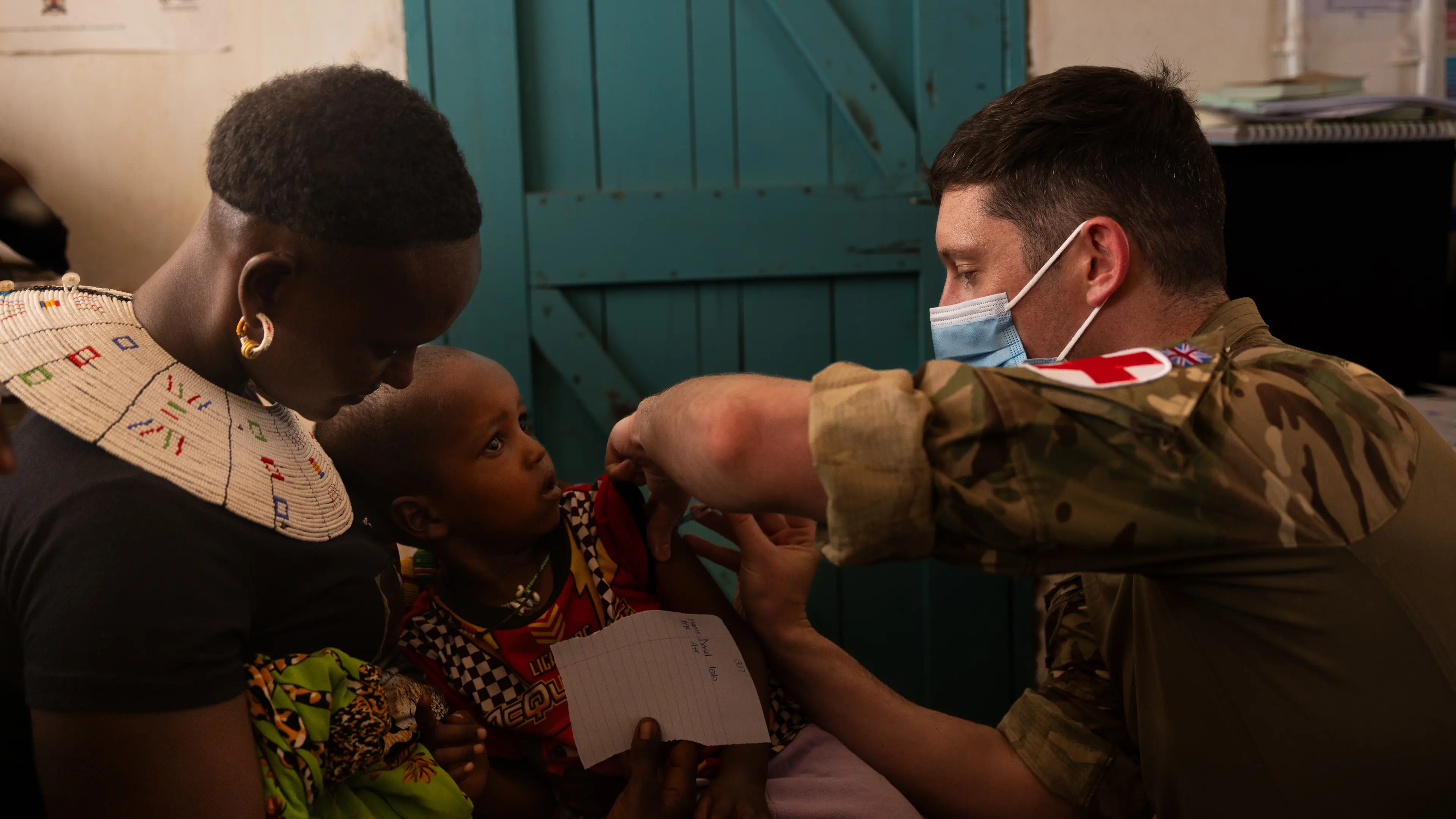
Some 90 reservists with Birmingham-based 202 Multi-Role Medical Regiment made the 6,000-mile trip for Exercise Haraka Serpent – a joint humanitarian effort with the host nation's Ministry of Health and local defence forces – bringing their healing power to the tribespeople of the country's arid savannah.
They also worked to assist charity Beyond Zero, established by Kenya's former first lady Margaret Kenyatta to reduce child deaths and HIV transmission.
In a combined endeavour, the organisations set up clinics for civilians in the isolated counties of Laikipia and Samburu deep in remote countryside.
Travelling by road for two hours and in temperatures topping 35 degrees centigrade, the teams operated out of tented clinics in austere conditions for just over a week.
In one location – near the British training area at Archer’s Post in Laresoro – in excess of 300 people, more than half of them children under the age of 12, turned out for help in the first 24 hours. Many had walked for several days to attend.
Patients included a critically ill four-month old baby, diagnosed with sepsis (see panel), who received lifesaving intravenous antibiotics plus painkilling drugs. Medics also treated other conditions from respiratory problems to malaria.
Exercise planner Maj Rob Mathews (RAMS) revealed that the British contingent had included a wide range of specialists to help address a plethora of conditions.
They included midwives, gynaecologists, paediatricians and neo-natal practitioners, many bringing expertise from their civvy day jobs in the National Health Service.
He stressed that the medics had been well prepared for the deployment, and ready to face remote locations, searing temperatures and a difficult working environment.
Planning, which had been under way from the beginning of the year, had paid off. Assistance provided by the clinical engagement officer, Kenyan-born Maj Christine Duffy (RAMS), also proved invaluable in dealing with the language barrier and cultural issues.
Maj Mathews said the experience the soldiers had accrued would stand them in good stead for the future. The officer concluded: “This exercise highlights why many of our reservists joined the military – that is to travel, experience different cultures and be challenged clinically as well as in supporting and leadership roles.”
Lifesaving mission
Army paediatric nurse Capt Bradley Setchell (pictured below at a vaccination clinic) was confident that the combined efforts of Kenyan and British troops had made a significant difference during Exercise Haraka Serpent.
The arrival of one seriously ill baby, in particular, had focused the mind.
The officer revealed how the four-month-old had been suffering from a rapid heart rate, high temperature and breathing difficulties.
Sepsis was diagnosed and Kenyan Health Ministry nurse Rehema Lekalau responded with immediate intravenous antibiotics and paracetamol. The infant's life was saved as a result.
Capt Setchell said the exercise had been a tough but satisfying experience, involving the expertise of African and British health professionals.
He added: “This has been a collaborative effort, locally driven and it is something I am quite proud of the army for achieving.
“Paediatrics is an emotional speciality, just by its nature and there are lots of children and young people here.” Commanders were satisfied that the exercise has helped expand troops' experience, giving them confidence to work anywhere in the world.